

The complete guide
How to Choose a Bamboo Blend Quilt That Suits Your Bed and Your Climate
The problem with most quilts
Most people buy a quilt once and then live with it for a decade, whether it works or not. You wake up at 2am with one leg out. Or you add a blanket in April and never take it off. Or the fill has slowly crept to the bottom of the quilt until the top half is thin and the foot of the bed is lumpy.
None of that is bad luck. It is usually a mismatch between the quilt you bought and the room you sleep in, plus a construction choice that let the fill move around.
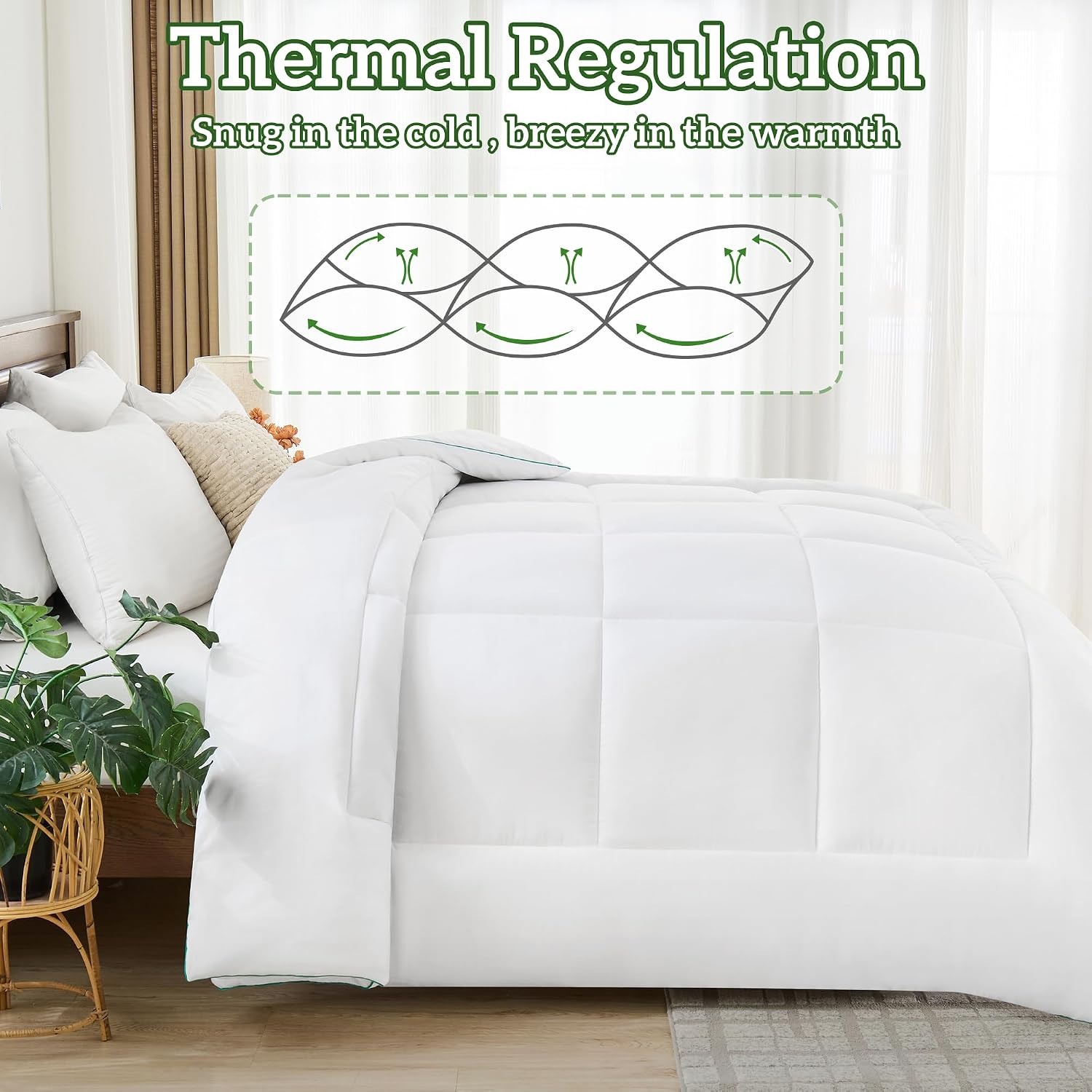
A bamboo blend quilt sorts out the first part by offering two weights instead of one. Box stitching sorts out the second. That is the short version, but it helps to understand what is actually going on inside a quilt before you choose.
What a bamboo blend actually means
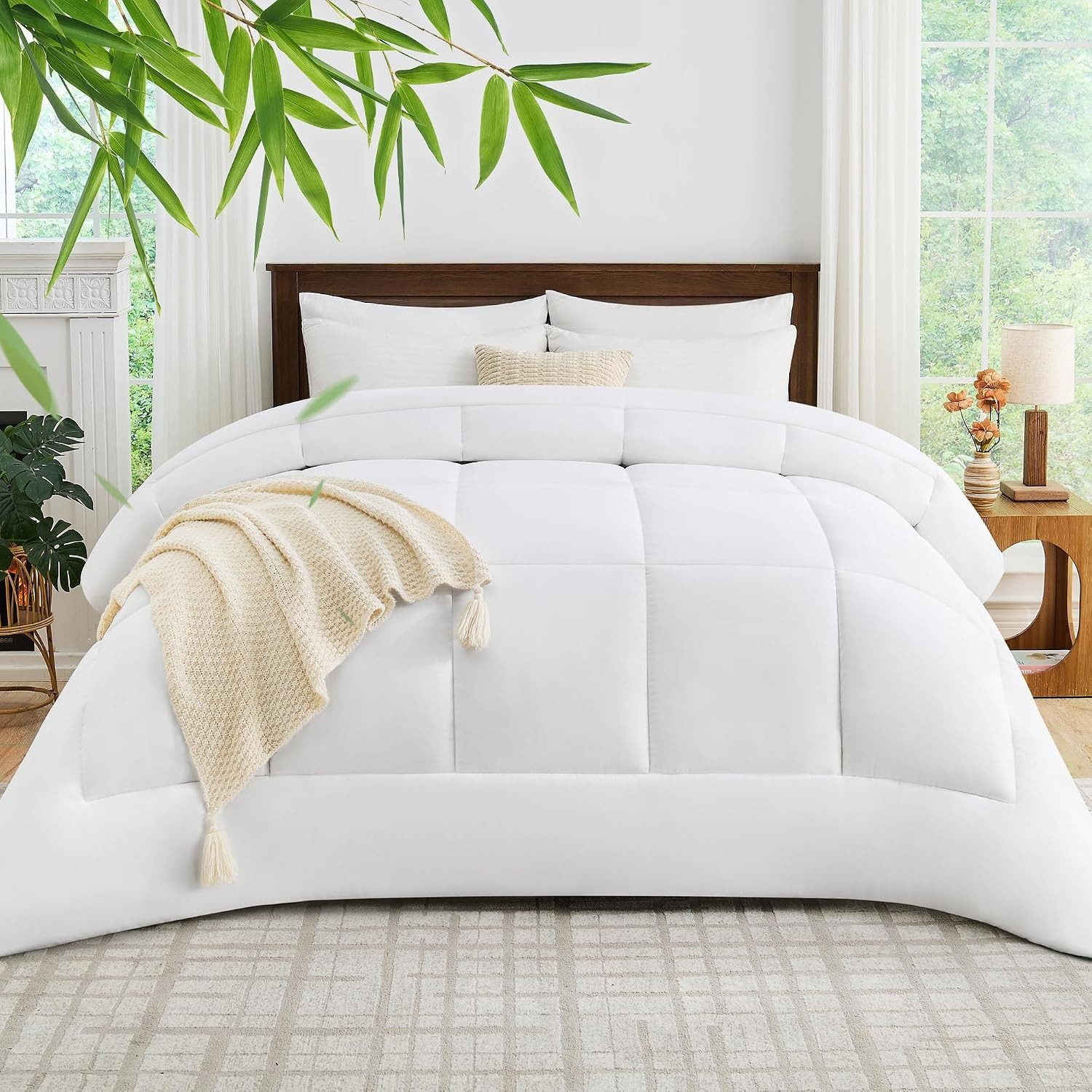
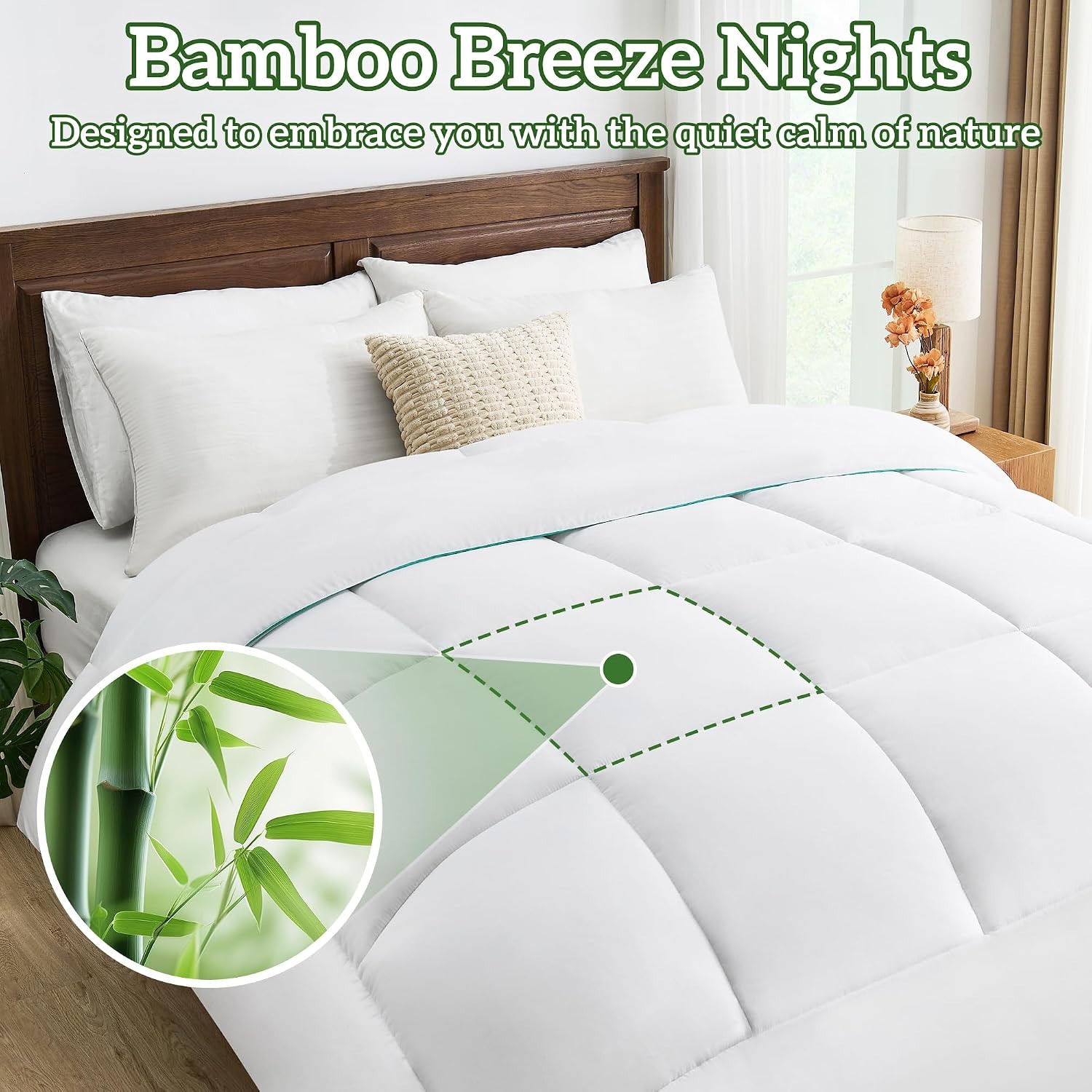
The fill in this quilt is 50% bamboo fibre and 50% microfibre. The cover around it is 100% microfibre in white, with piping stitched around the edge.
Blend is the important word. A blend is not the same as a pure bamboo fill, and anyone telling you a blended quilt behaves like a pure one is overselling. What you get is a fill that feels soft and light in the hand, drapes close to the body rather than sitting rigid above it, and packs down reasonably well when you store it.
Microfibre in the mix does useful work. It is resilient, it holds loft, and it washes without turning into a brick. Bamboo fibre contributes a smooth, slightly fluid feel. Together they give you a quilt that feels light for its warmth.
The cover being plain white matters more than it sounds. White sits invisibly under any quilt cover. You are not going to see a pattern ghosting through a pale duvet cover, and you are never going to have a clash.
GSM, and why it is the number to pay attention to
GSM stands for grams per square metre. It measures how much fill is packed into each square metre of the quilt. Higher GSM means more fill, which usually means more warmth.
This quilt comes in two options.
150 GSM is the lightweight summer quilt. It is for warm rooms, warm sleepers, bedrooms with air conditioning running overnight, and most of the New Zealand summer. If you are the person who sleeps with one foot out from under the covers in October, this is the one.
300 GSM is the all season quilt. It covers spring and autumn comfortably and handles a mild to moderate winter. In a genuinely cold bedroom you might want a blanket on top for the worst few weeks, which is completely normal. In a hot summer, most people would find it too much.
Here is the honest guidance nobody gives you in a shop. Your bedroom temperature matters more than the season name on the label. A north-facing room in Auckland and a south-facing room in Dunedin are different planets. Think about how your room actually feels at 4am, not what month it is.
If you cannot decide, buying both weights is the practical answer. One lives on the bed, one lives in the cupboard, and you swap them twice a year. That is what most people who have been through three wrong quilts eventually do.
Sizing without the guesswork
Three sizes are available, each in both weights.
- Double, 180 x 210 cm
- Queen, 210 x 210 cm
- King, 240 x 210 cm
The usual rule is to match your quilt to your bed size. The Queen is square at 210 x 210, while the Double and King are wider or narrower against the same 210 cm length.
Two situations where you might go up a size. First, if two people share a Double and one of them is a cover thief, a Queen quilt on a Double bed gives you enough slack that there is something left for everyone. Second, if you have a deep mattress or a mattress topper, the extra height eats into your side drop, and the next size up puts it back.
One important check. Buy your quilt cover in the same size as your quilt, not the same size as your mattress. Those two usually agree, but not always, and a quilt swimming inside an oversized cover is a nightly annoyance.
Why box stitching and corner tabs matter
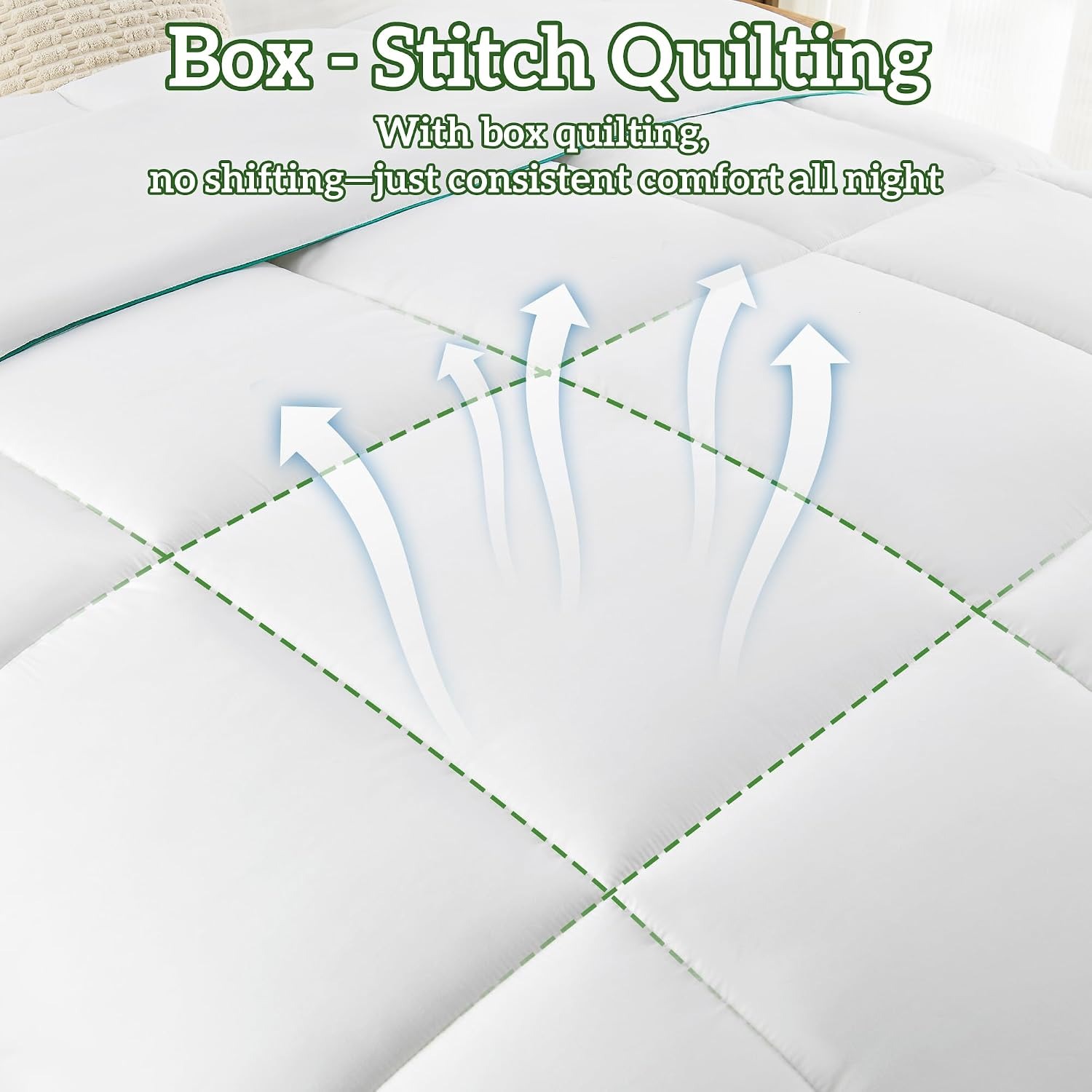
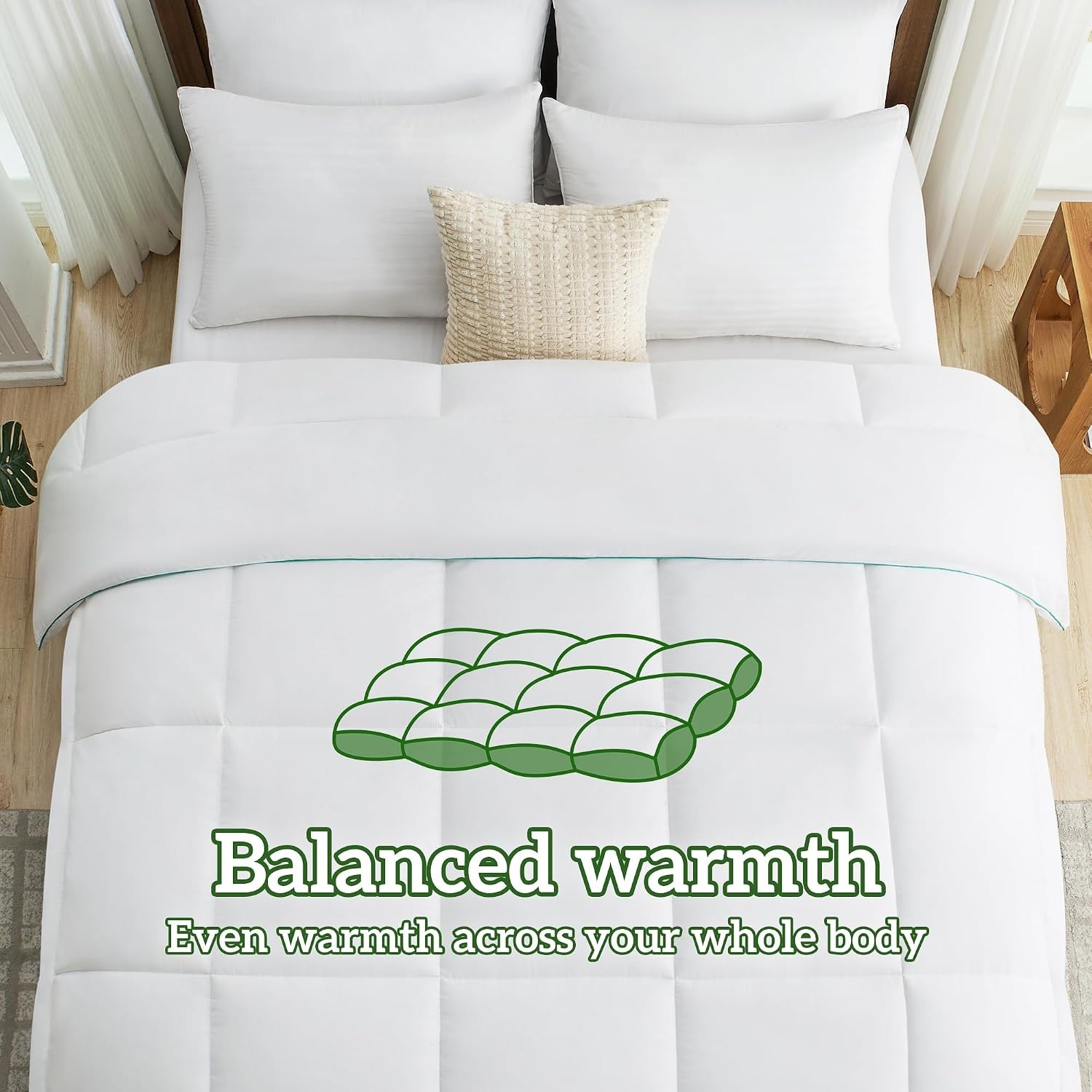
Box stitching is a grid of seams across the quilt. It divides the fill into separate compartments so it cannot wander. Without it, gravity and a few hundred nights of movement push the fill downhill, and you end up with a quilt that is thin at the shoulders and heavy at the feet.
You will not notice box stitching on day one. You notice it in year three, when the quilt still looks like it did when you unwrapped it.
Corner tabs are the other quiet feature. There are four of them, one at each corner. You tie them to the ties inside your quilt cover. Do that once when you change the bedding and the quilt stops sliding around inside the cover. If you have ever had to shake a cover out like a tablecloth at midnight to get the quilt back into the corners, you know exactly why this is worth thirty seconds of effort.
Looking after it
The care routine is straightforward.
Machine wash on a gentle cycle with a mild detergent. No bleach. Do not iron. Line dry or tumble dry on low heat.
A few things that make a difference in practice.
Use a quilt cover. It is the single best habit for making any quilt last, because the cover absorbs the body oils, the spilled tea and the dog hair. You wash the cover with your sheets every week or two and the quilt itself only needs doing a couple of times a year.
When you do wash the quilt, give it plenty of room in the machine. A King quilt in a small front loader does not get properly clean and does not rinse properly either. If your machine is on the small side, a laundromat machine is the better option.
Drying is where most people go wrong. Fill that is still damp in the middle will clump and smell. Take the quilt out during drying and shake it hard a few times to break up the fill and let air through. Then check the thickest sections with your hand before you call it done.
For storage, keep it somewhere dry and let it breathe. A cotton bag or an old pillowcase is better than sealed plastic, which traps moisture.
Who this quilt suits
It is a good fit if you want a soft, light quilt that is easy to wash at home and does not need special handling. It works for guest rooms, kids' rooms once they are past the small child stage, share houses, and anyone setting up a new place who wants a quilt that will not look tired in two years.
It is less of a fit if you want a very heavy, dense winter quilt for an unheated room, or if you are after a specific natural fibre with no synthetic component. This is a blend, and it is upfront about that.
The short version
Pick your weight first. 150 GSM for summer and warm rooms, 300 GSM for all season use. Pick your size to match your bed and your quilt cover, going up a size only if you share a Double or have a deep mattress. Tie the corner tabs in. Use a cover. Wash it gentle, dry it fully, shake it out.
Delivery is free across New Zealand on orders of $99 or more, and no GST is added at checkout. If you are still deciding between the two weights, tell us about your bedroom and we will help you pick.