
The complete guide
How to Choose a Kids Quilt Cover Set That Actually Lasts
The problem with most kids bedding
Children's bedding gets put through more than any other linen in the house. It is slept on, jumped on, eaten on, cried on and occasionally used as a cape. It gets washed far more often than an adult's bedding, and it has to survive all of that while still looking like something a child wants to be in.
Plenty of sets fail one of those tests. Some look great in the photo and feel like paper after three washes. Some are lovely and soft but wrinkle so badly that the bed never looks made. And plenty are sized for a market other than ours, which is how people end up with a cover that is 10 cm short of their quilt.
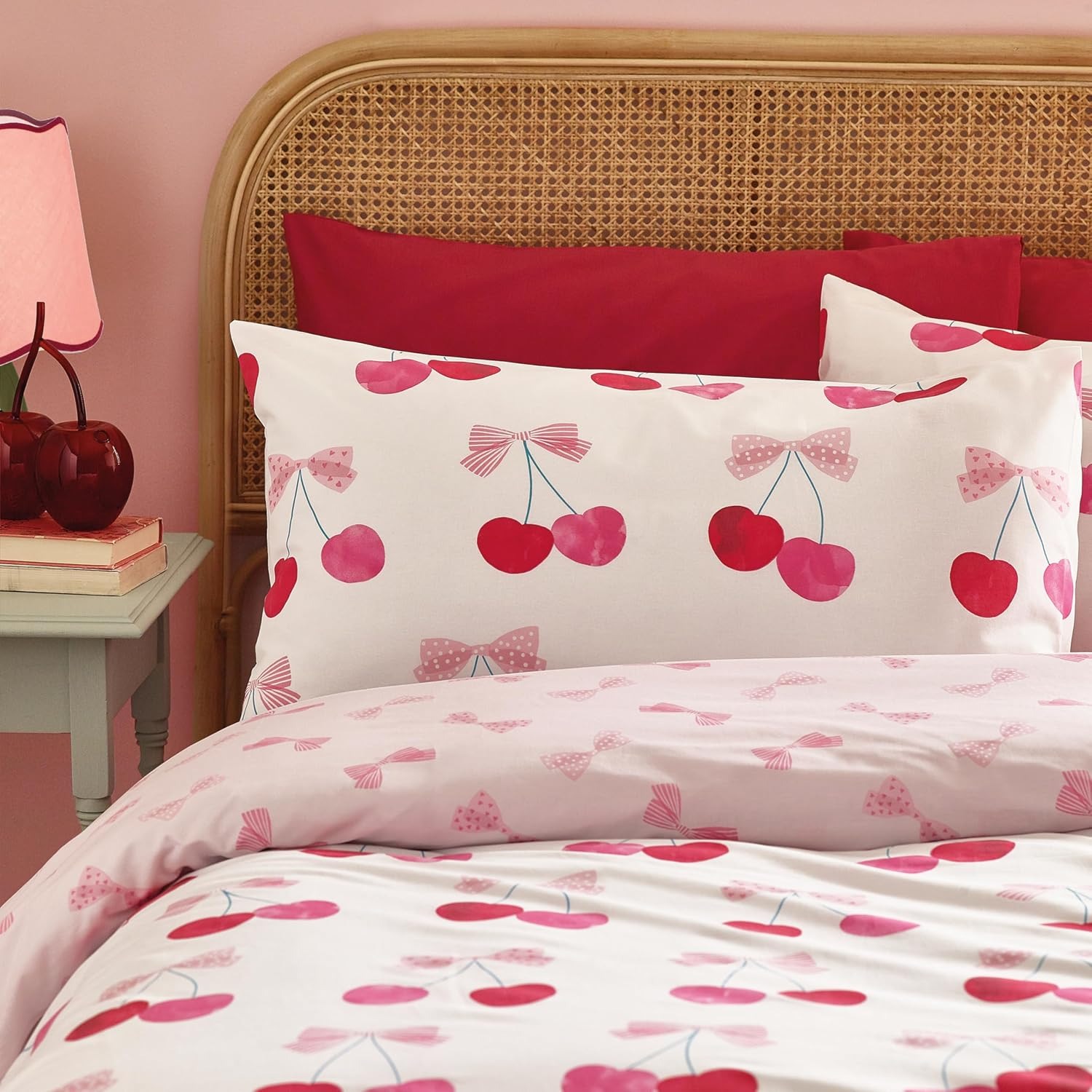
This page is about picking a set that avoids those traps, using this cherries and bows cover as the working example.
What you are actually buying
This is a two-piece set. One quilt cover, 135 x 200 cm, and one pillowcase, 50 x 75 cm. No sheets. That is standard for a quilt cover set, and it is worth knowing up front so you are not waiting on a fitted sheet that was never in the box.
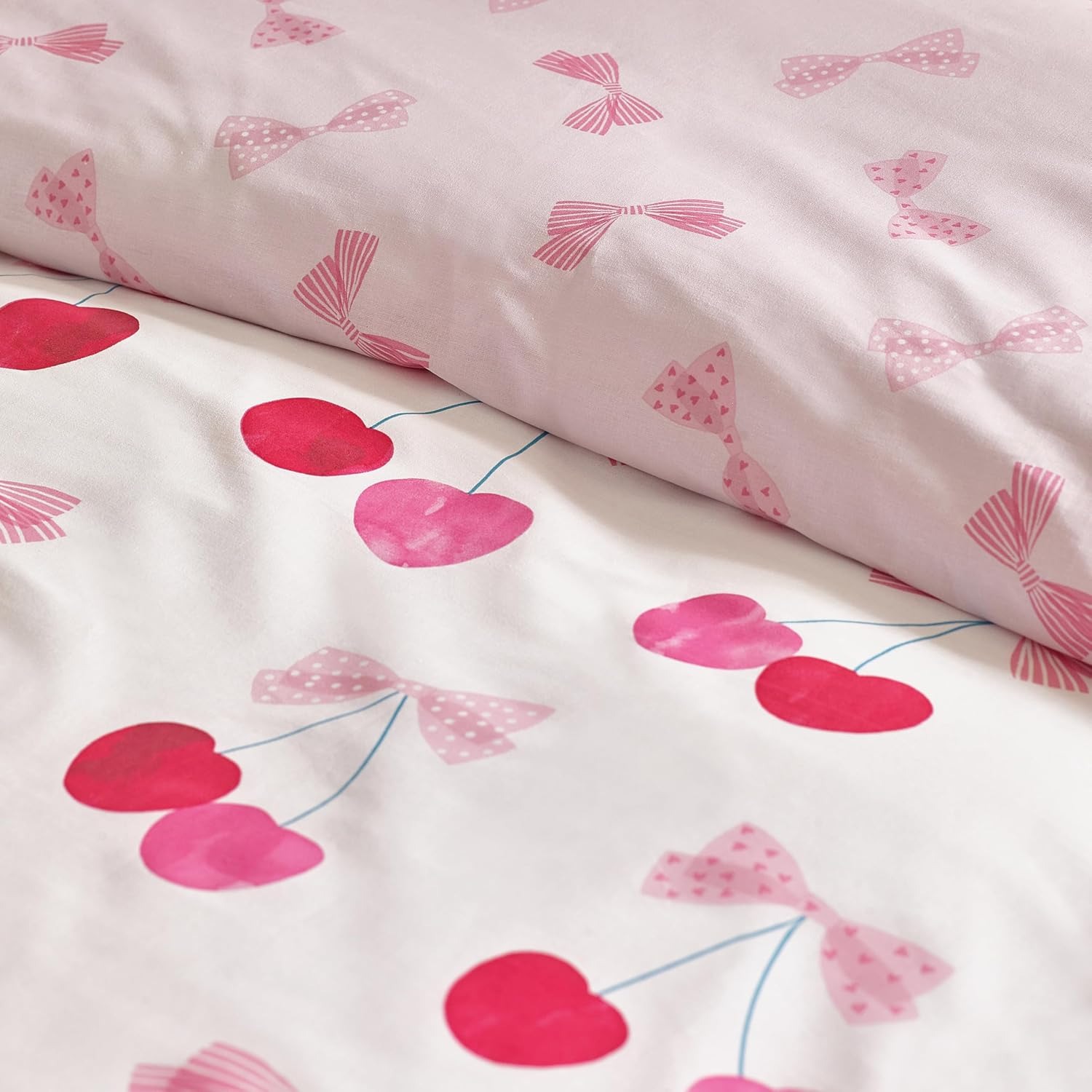
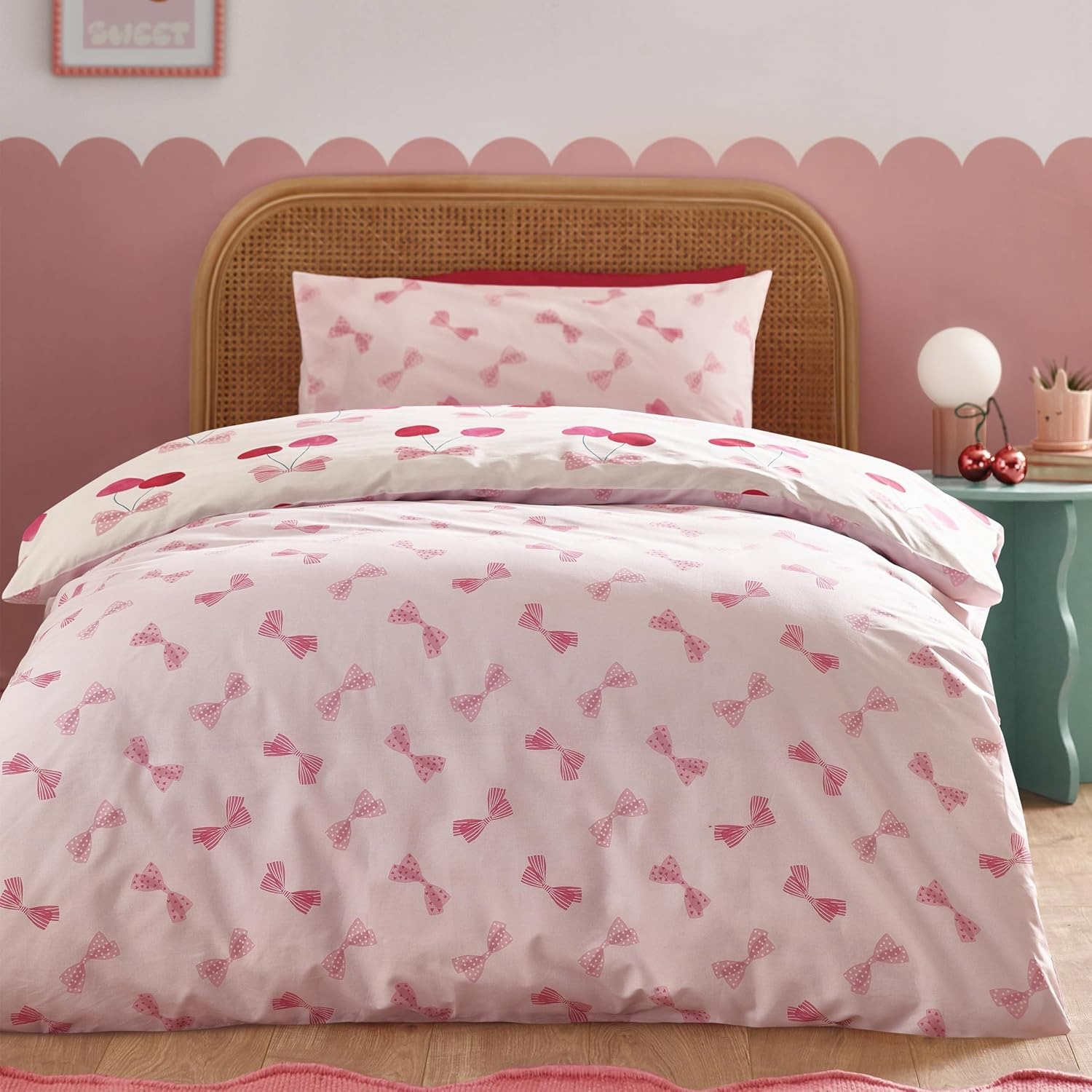
The print is pink with cherries and bows. The cover is fully reversible, so each side carries its own look. The fabric is polycotton, 52% polyester and 48% cotton, with a 138 thread count. The cover closes with buttons.
That is the whole product. No gimmicks, nothing to break.
The size question, answered plainly
This is the part to get right, so read it twice.
The cover is 135 x 200 cm. That is a slightly shorter single size. The quilt most New Zealand households have on a single bed is 140 x 210 cm. So this cover is 5 cm narrower and 10 cm shorter than the common local single quilt.
What does that mean in practice? If your quilt is 135 x 200 cm or 140 x 200 cm, it fits properly. If you have a junior or toddler quilt, which is smaller again, it fits loosely and that is fine, you simply tuck the extra under. If your quilt is a full 140 x 210 cm, it will be a stretch. You can sometimes force a 210 cm quilt into a 200 cm cover, but the fabric sits under tension, the corners bunch, and the seams take strain every time the bed is made.
So measure. Lay the quilt flat, run a tape from the top edge to the bottom edge, and compare. Two minutes now saves a return later. If the numbers are close and you are unsure, ask us.
Why reversible matters more than you think
A reversible cover is not just a styling trick. It changes how the set behaves over a year of use.
First, it doubles the look. A child gets bored of a bedroom long before an adult does. Flipping the cover gives them a sense of change without spending anything, which buys you another six months before anyone asks for new bedding.
Second, it spreads the wear. The top side of a quilt cover takes the sunlight through the window, the friction of being sat on and the brunt of the washing. Alternating sides means neither one ages twice as fast as the other.
Third, it is handy when one side cops a stain you cannot quite shift. Flip it, carry on, deal with it later.
The fabric, and why a blend is sensible here
Pure cotton is lovely. It is also slower to dry, heavier when wet and creases hard. On a child's bed that is washed weekly, those are real drawbacks.
A polycotton blend like this one sits in the middle. The cotton content gives you a soft, breathable surface against skin. The polyester content gives you quick drying, shape retention and far less ironing. At 138 thread count, the weave is light and smooth rather than dense and heavy, which also helps it dry fast.
If you are chasing the very softest hand feel, a high thread count cotton will beat it. If you are chasing something that looks tidy on a Tuesday morning after a Monday night wash, the blend wins. For most families with kids, the practical choice is the right one.
Buttons versus zips
Button fastening gets overlooked, but it is a small quality-of-life win.
Zips on bedding are fast to close and prone to failure. The slider jams, a tooth lifts, and the cover is effectively finished even though the fabric is fine. They also catch on fingers and sleeves, which is more of an issue with children than adults.
Buttons are slower by maybe fifteen seconds. In exchange, there is nothing to break. If a button does come loose, you sew it back on in two minutes with a needle and thread. Do them up before washing and the cover will not turn inside out or swallow the pillowcase in the machine.
Who this set suits
It suits a single bed, a king single at a pinch with a 200 cm quilt, a trundle, or a toddler bed with a junior quilt inside.
It suits a child who likes pink and likes a bit of pattern, but is past the stage of wanting cartoon characters. The cherry and bow repeat is small and neat, so it works in a room that is otherwise fairly plain.
It suits a household that washes bedding often and does not want to iron. And it suits anyone building a rotation, because the best single quilt cover for girls is usually the one you own two of, so there is always a clean one in the cupboard.
It does not suit someone who needs a full bed-in-a-bag with sheets included, and it does not suit a double or queen bed.
Looking after it
The care routine is simple. Wash before first use. Machine wash at 40 degrees with similar colours. Tumble dry on low, or hang it in the shade.
The two habits that matter most are closing the buttons before washing, and taking the cover out while it is still slightly damp. The first keeps the cover from tangling with everything else in the drum. The second means you can shake it out and hang it, and the remaining creases drop out on their own.
Skip the bleach. Printed bedding and bleach do not get along, and a pale patch on a pink cover is permanent. For spills, get to them quickly with cold water and a mild detergent. Most things that end up on a child's bed come out easily if you do not let them dry in.
Avoid very hot washes. They are rarely necessary and they are hard on both colour and fibre.
A few practical buying notes
If you are buying for bunks, buy two. The sizes match, and having both beds in the same print pulls a shared room together.
If you are buying as a gift, a quilt cover set is one of the few gifts that gets used every single night. Pair it with a plain white fitted sheet in the same size and you have a complete bed.
If your child is between beds and you are not sure which size they will land in, the single is usually the safer buy. A single cover over a junior quilt works. A junior cover over a single quilt does not.
The short version
Two pieces, pink cherries and bows, fully reversible. The cover is 135 x 200 cm, the pillowcase 50 x 75 cm. Polycotton at 138 thread count, buttons rather than a zip, machine wash at 40 and tumble dry on low.
The one thing to check before you order is your quilt. This cover is shorter than the usual New Zealand single quilt, so measure first. Get that right and you have a bright, washable, two-sided cover that will handle everything a child's bed throws at it.