
The complete guide
How To Choose A Kids Single Quilt Cover Set That Actually Gets Used
The bedding that ends up in the bottom of the cupboard
Most families have one. A quilt cover set bought with good intentions that your child refused to sleep under, or that never quite fitted the quilt, or that turned stiff and faded after four washes. It sits folded at the back of the linen shelf getting moved every time you look for a towel.
Kids bedding gets more wear than almost anything else in the house. It is slept on nightly, kicked off, climbed over, used as a fort roof, and occasionally rained on by a cup of water left on the bedside table. So the two questions that matter are simple. Will your child actually like it, and will it survive the washing machine?
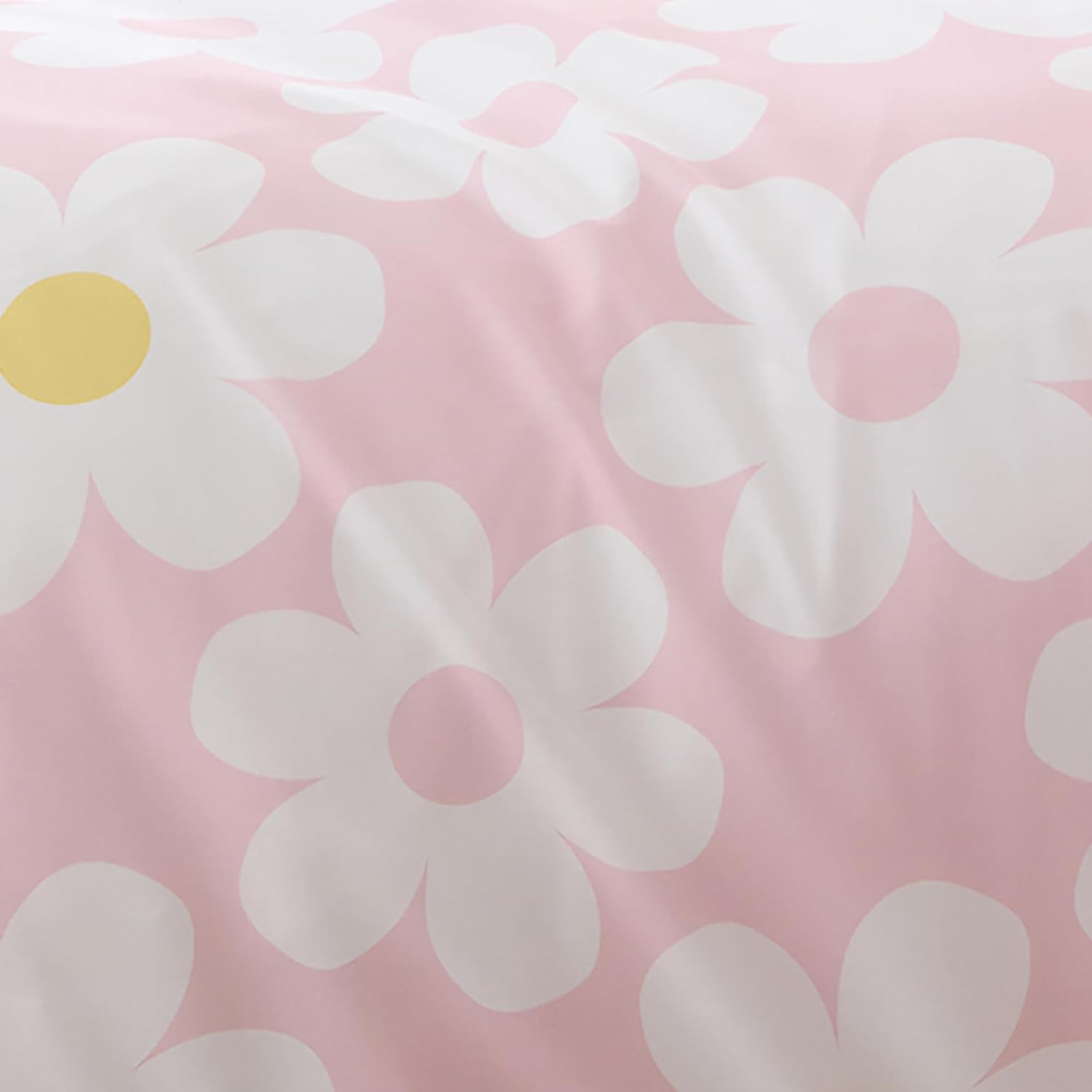
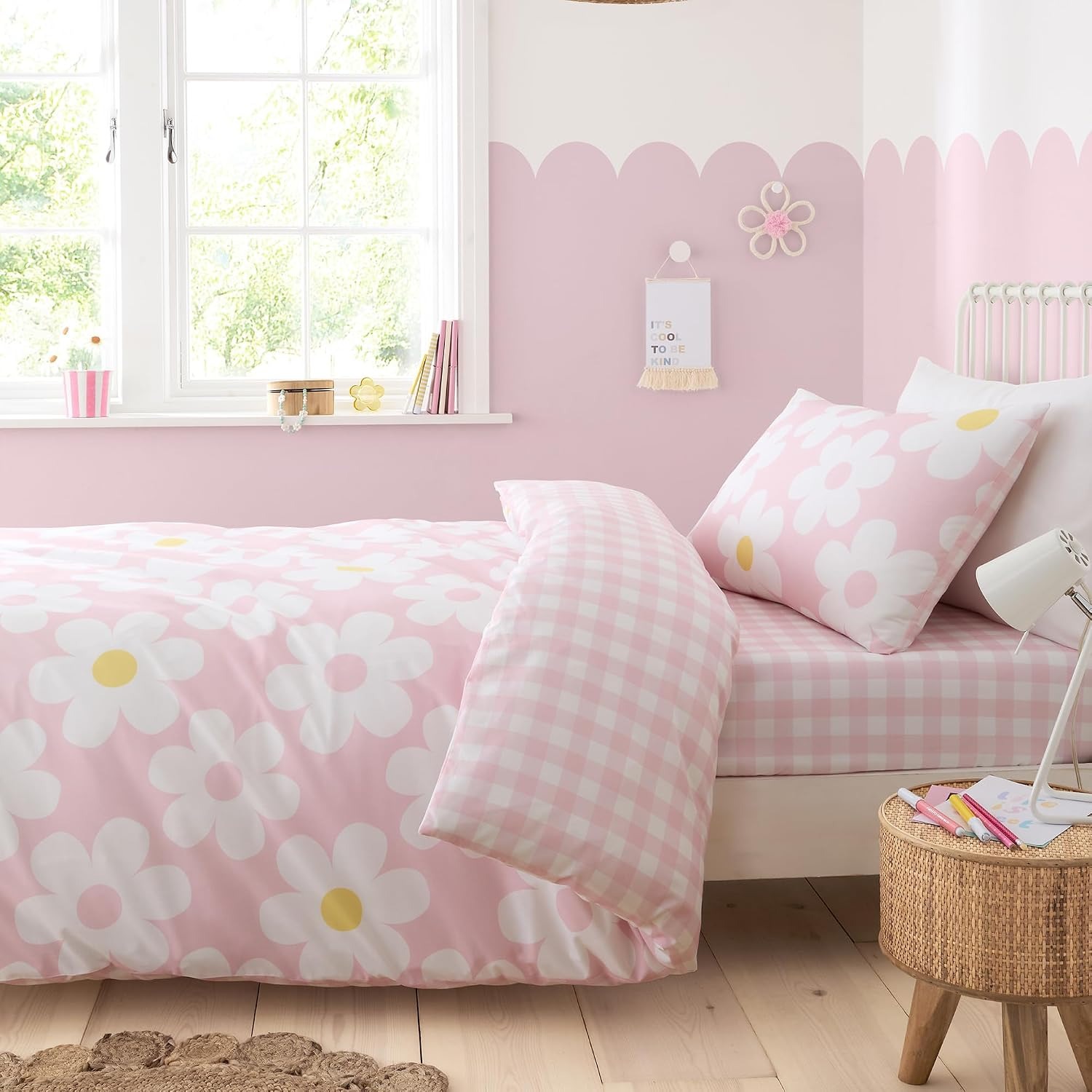
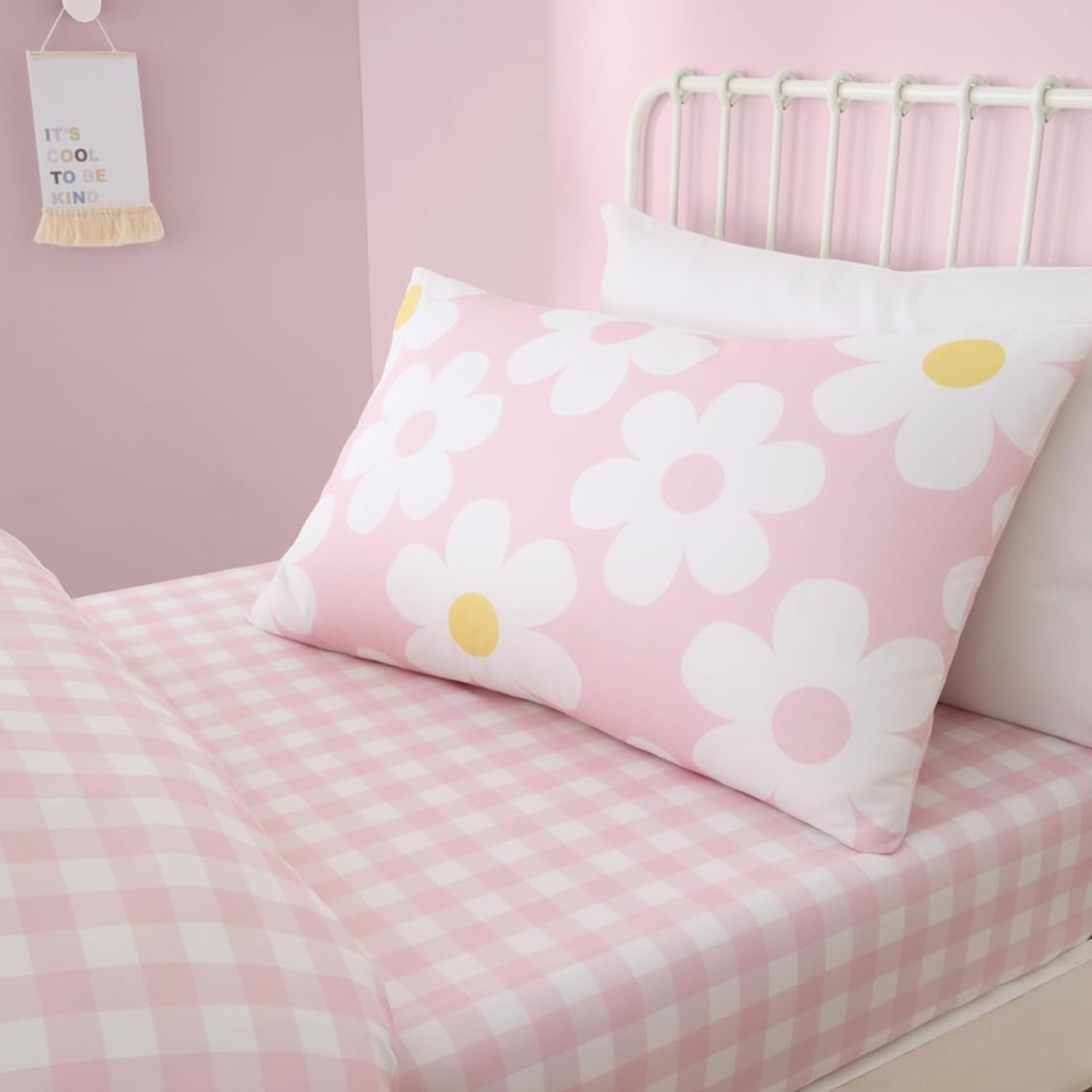
A reversible set like this one answers the first question twice. Daisies on pink for the days they want cheerful, pink and white gingham for the days they want calm. Same cover, different bed.
What reversible actually gives you
A reversible quilt cover is not a gimmick. It is two covers in the space of one, and the practical wins add up.
The obvious one is variety. Children change their minds about their room constantly. Being able to flip the bed over on a Saturday morning scratches that itch without a shopping trip. The less obvious win is wear. If you flip the cover each time you wash it, both faces get used evenly, so neither side takes all the sun fade or all the friction.
There is also a styling benefit. The daisy side sets the tone for a room, bright and floral. The gingham side is quieter and works with more wall colours and more toys on the floor. If your child's bedroom is already busy, the check can bring the volume down a notch without changing anything else.
Getting the size right, which matters more than people think
This is where most quilt cover purchases go wrong, and it is worth slowing down for.
The cover here measures 140 x 200 cm. That is a slightly shorter single size. The quilt most commonly sold as an New Zealand single measures 140 x 210 cm. Same width, ten centimetres shorter in length.
What happens in real life is that the longer quilt still fits inside, but it fills the cover completely. You lose the little bit of slack that lets a quilt drape softly, and the foot end can look slightly compressed. For most kids beds this is a non-issue. Children are short, the quilt is tucked, and nobody notices. But if you are particular, or if you have a tall pre-teen who hangs over the end of the bed, measure first.
To measure, lay your quilt flat on the floor and run a tape from the top edge to the bottom edge. If you get 200 cm, perfect match. If you get 210 cm, expect a snug fit. If you get anything bigger than that, you are likely dealing with a king single or double, and this cover is not the one.
The pillowcase is 48 x 76 cm, which is the standard pillow size used on almost every New Zealand bed. No surprises there.
Why polyester, and when it is the right call
Cotton gets all the attention in bedding, and for an adult bed it often deserves it. For a child's bed, the maths is different.
Polyester at 200 thread count does several useful things. It dries fast, which means a stripped bed on a rainy Tuesday can be remade the same evening. It barely shrinks, so the cover you measure today is the cover you have in two years. It holds printed colour well, which is why bright kids prints are so often printed on polyester rather than cotton. And it resists creasing, so the bed looks tidy even when it is made in thirty seconds by an eight year old.
The trade-off is breathability. Polyester holds warmth a bit more than cotton does. In an New Zealand summer that can matter, and the simple fix is a lighter quilt insert and a cotton fitted sheet underneath. The sheet is the layer touching skin for most of the night, so getting that part in cotton balances the whole bed nicely. In winter, the extra warmth is a small bonus.
If your child runs very hot, or has skin that reacts to synthetic fabrics, a cotton cover will suit them better. For everyone else, easy-care polyester earns its place.
Building the rest of the bed
The set gives you the cover and one pillowcase. You will need a few other pieces.
A fitted sheet in plain white, cream or soft pink works with both sides of this cover. Avoid a patterned sheet unless you enjoy clashing prints. A flat sheet is optional and mostly a matter of household habit.
For the quilt insert, a lightweight one is usually right for a kids room, since children generate plenty of heat and tend to kick covers off anyway. A white or cream insert is best, because any coloured insert risks showing faintly through the cover.
One throw or cushion in a complementary colour finishes the look if you want it. The yellow of the daisy centres pairs well with soft green, mustard or a deeper rose. Two pieces is plenty. A bed buried in cushions just means more things on the floor by Thursday.
Washing and keeping it looking good
Wash the set before the first night it goes on the bed. It softens everything and clears manufacturing residue.
After that, a gentle machine wash at 30 degrees with similar colours is all it needs. Turn the cover inside out before it goes in, which protects the printed surface from rubbing against everything else in the drum. Skip the bleach entirely, even the gentle kinds, because it will dull the pink.
Tumble dry on low if you are using a dryer. Pull the cover out while it is still slightly damp, give it a good shake and put it straight on the bed. The remaining moisture pulls most of the creases out as it dries. If you line dry, hang it in shade or inside out rather than in direct midday sun, which is harder on printed colour than the washing machine ever is.
Do not iron it. Do not dry clean.
Two covers in rotation is genuinely worth it on a kids bed. The second one earns its money the first time someone is sick at 2am.
Who this suits
This set works best for a child roughly between preschool and early high school who likes florals, pastels or pink. The print is not tied to a show or a character, which is the main reason bedding gets rejected a year after it is bought.
It also suits a guest single bed where you want something soft and friendly without committing to a theme, and it suits bunk beds, where two reversible covers let each child have a different face showing on the same set.
It is less suitable if your child needs pure cotton against their skin, if your bed takes a king single or double quilt, or if you need a full set including sheets in one purchase.
The short version
Two pieces, one single quilt cover at 140 x 200 cm and one pillowcase at 48 x 76 cm. Daisies on pink one side, pink and white gingham the other. 100% polyester at 200 thread count, so it washes easily, dries fast and keeps its colour.
Check your quilt length before ordering, because 140 x 200 cm is shorter than an New Zealand single quilt, and an New Zealand single quilt is usually 140 x 210 cm. Add a cotton fitted sheet for comfort, keep the wash warm and the dryer low, and buy a second set if you can. Your future self at 2am will thank you.