
The complete guide
Choosing a Fairy Quilt Cover Set for a Single Bed
The bedtime problem nobody warns you about
There is a stretch of childhood where the bedroom stops being a place you put your child and starts being a place they actually own. It usually lands somewhere around four or five, often when they move out of a cot or a toddler bed and into a proper single. The bed is suddenly enormous. The room feels different. And a lot of kids who used to go down without complaint start finding reasons to stay up.
Bedding will not fix a bedtime problem on its own. But it does more than people expect. A bed that looks like it belongs to that particular child, with something on it they chose, is a bed they are more willing to climb into. That is really what a themed quilt cover set is for. The fairy print is not decoration for its own sake, it is a small bit of ownership.
The practical side matters just as much. Children's bedding gets washed far more often than adult bedding. There are spills, there are sick nights, there is the occasional disaster involving a felt tip. If a cover takes two days to dry or comes out of the wash looking tired, you will stop using it. So the real question when you are shopping is whether the thing survives the laundry as well as it looks on the bed.
What you are actually buying
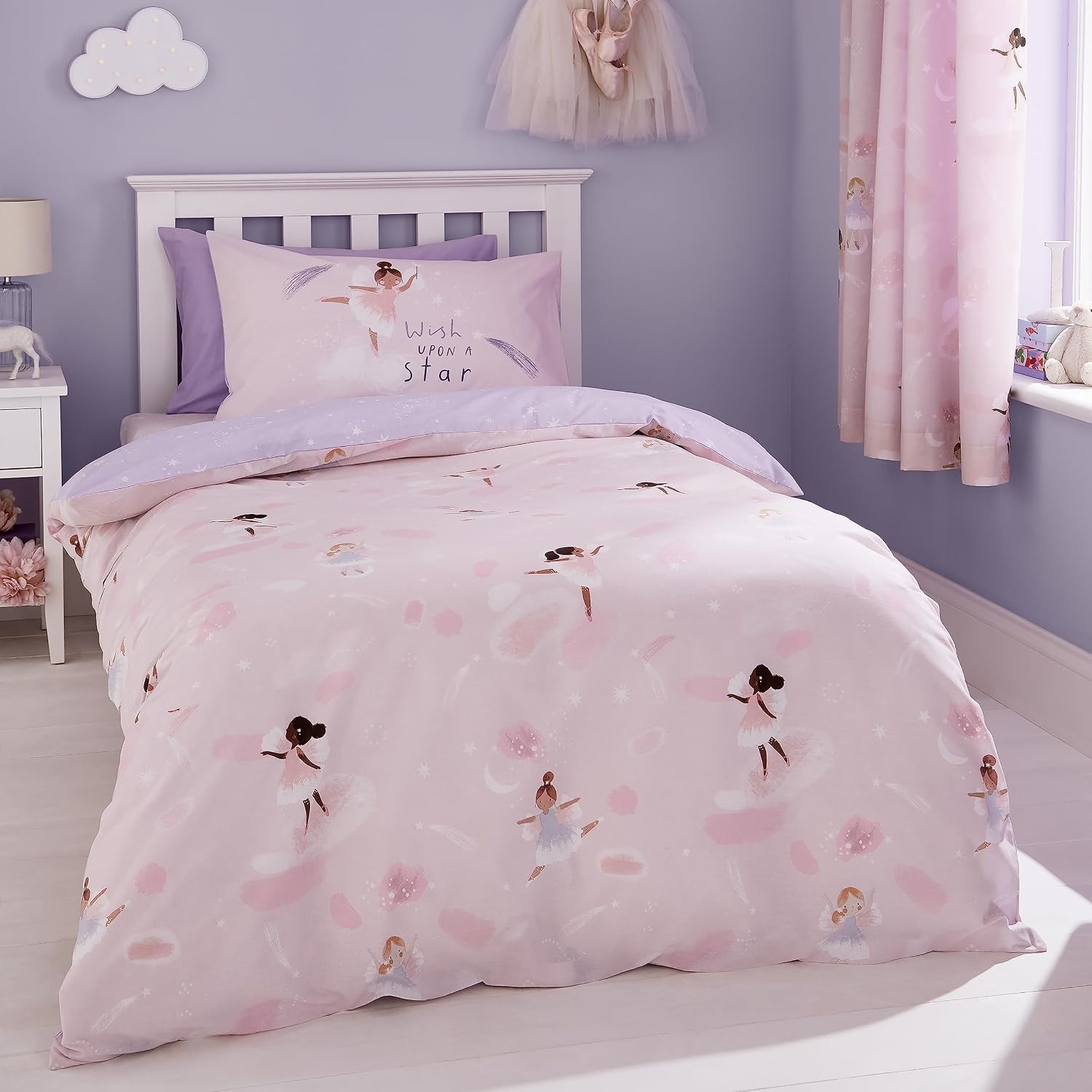
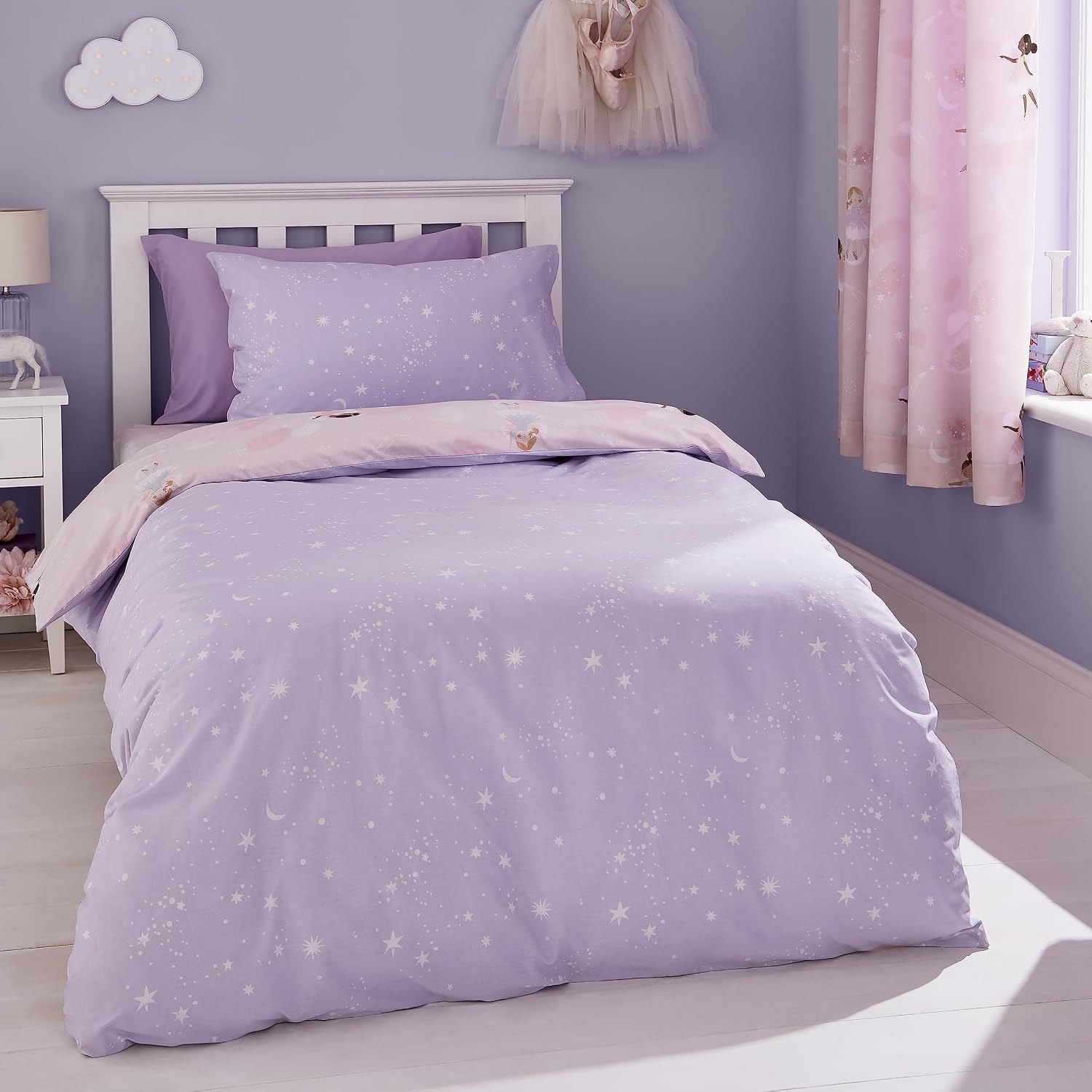
This is a two-piece set. One quilt cover measuring 135 x 200 cm, and one pillowcase measuring 50 x 75 cm. There is no quilt inside and no fitted sheet, which is normal for a cover set and is the reason it costs what it does. You slide your existing quilt into the cover and button it shut.
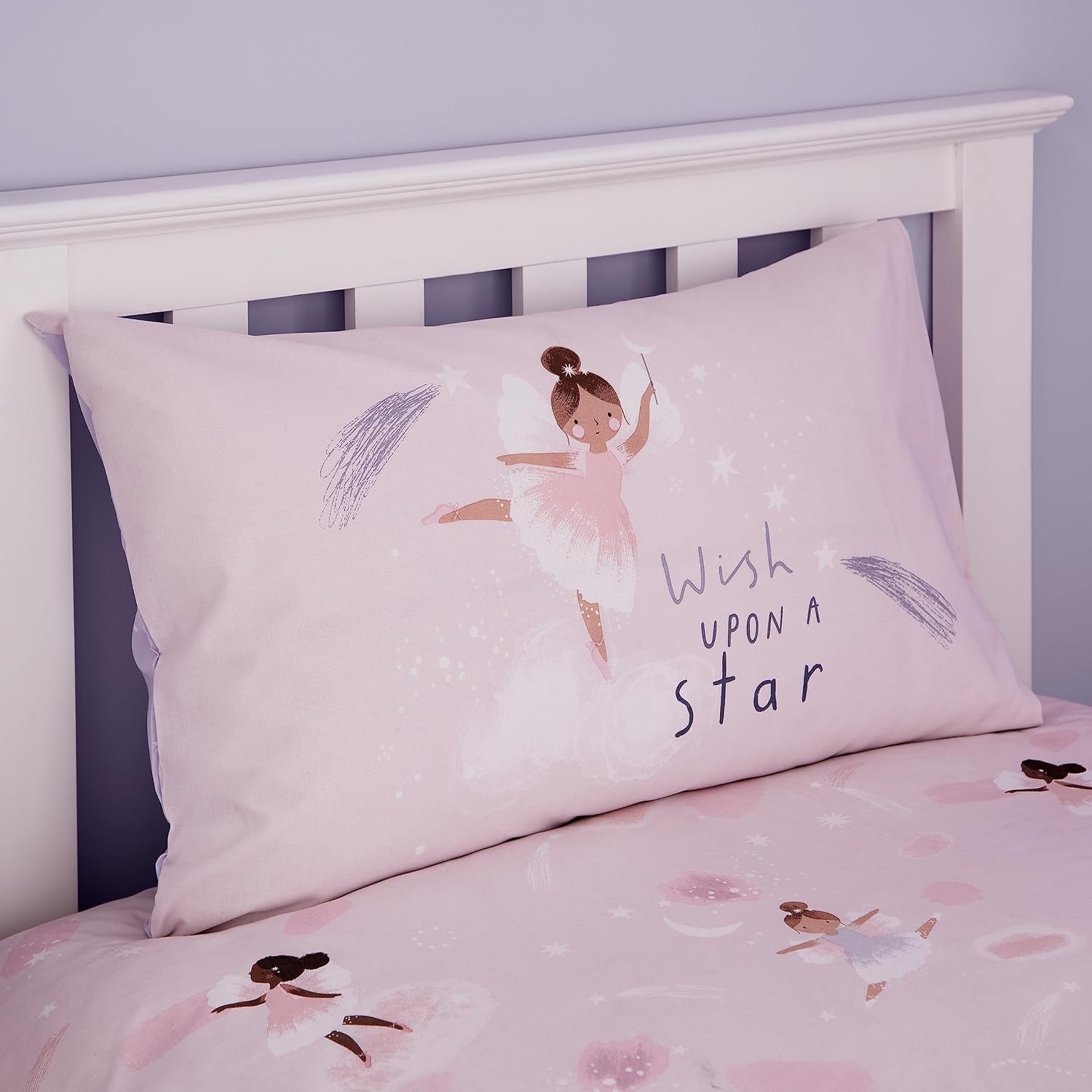
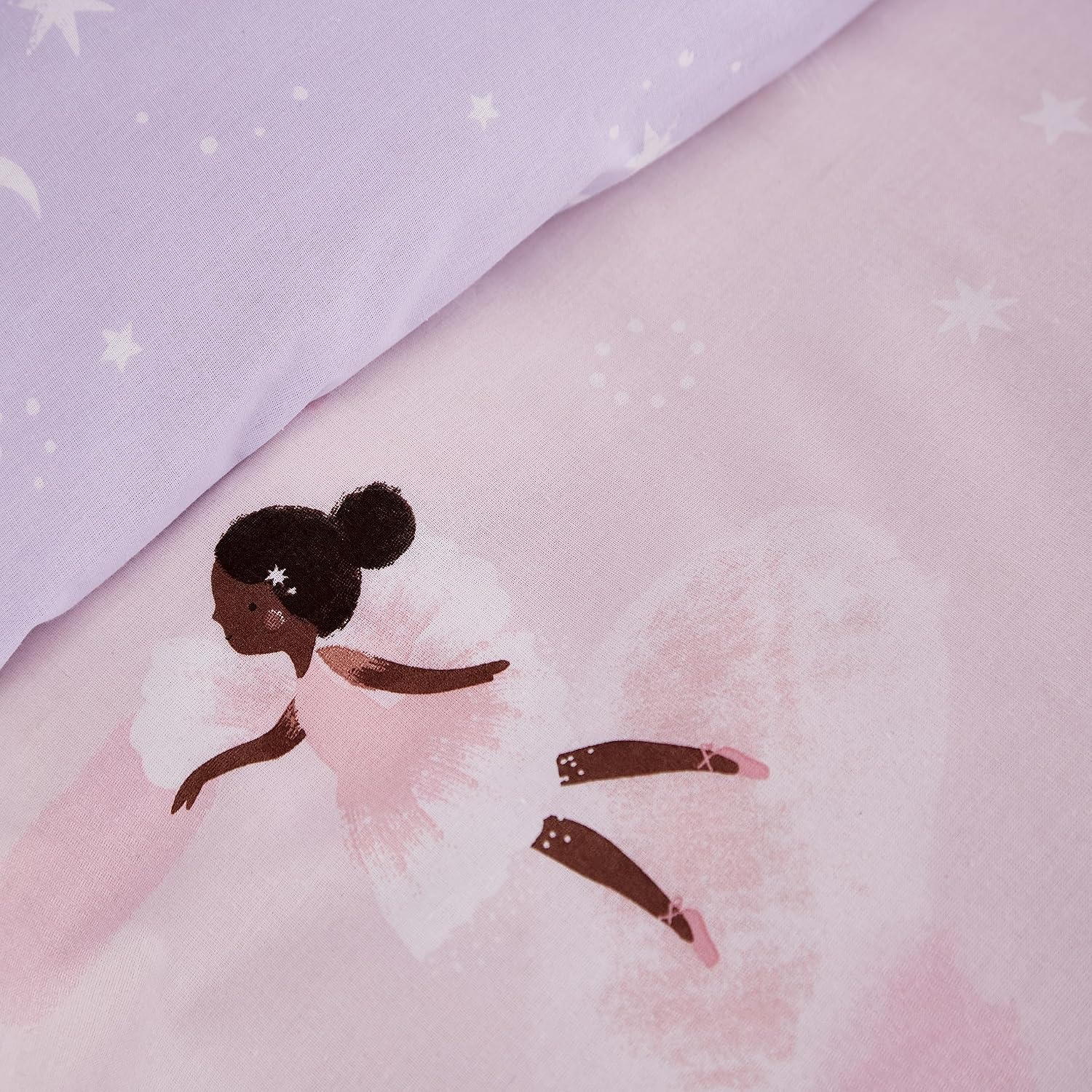
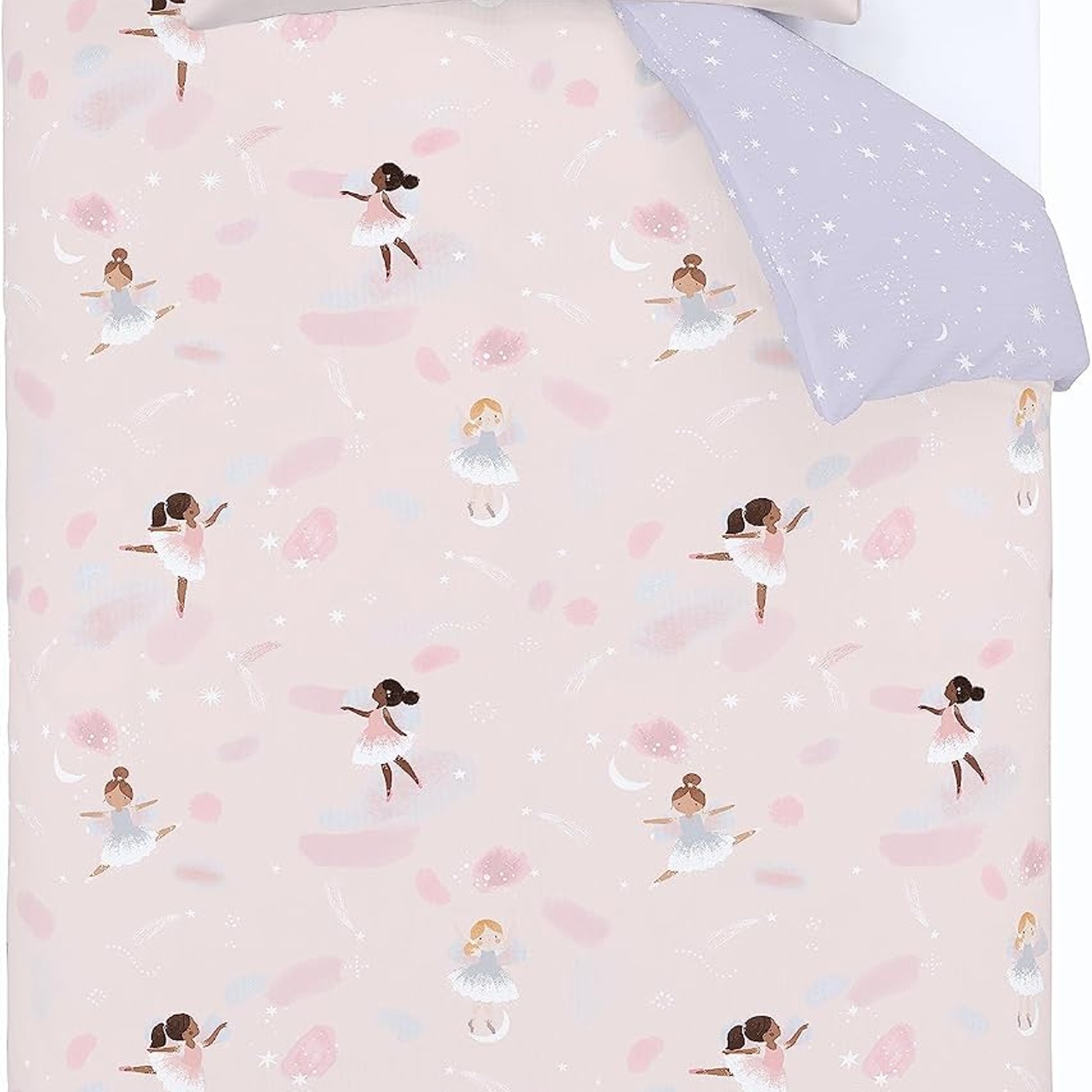
The cover is reversible, printed on both sides. Flip it and the bed looks different. That sounds like a small thing until you are mid wash cycle on a Tuesday and your child wants a change, or until they decide at seven years old that they are too old for one side but still fine with the other.
The fabric is 52% polyester and 48% cotton with a 138 thread count. Those numbers are worth unpacking a little, because thread count gets used as a shortcut for quality when it really is not one. In a blend like this, a moderate thread count means a lighter, more open weave. That is a good thing for a child's bed. It breathes, it dries fast on the line, and it does not hold heat the way a dense heavy sheeting fabric would. A pure cotton 400 thread count cover sounds more impressive and is genuinely lovely on an adult bed, but it takes longer to dry and creases far more.
The closure is buttons. Not a zip. Buttons sit flat and there is no slider to press into anyone's cheek, and they are simple to replace if one ever pops. Do them up before the cover goes into the machine and it will not swallow half the load.
The size question, answered honestly
Here is the part worth reading twice. This cover is a shorter single, 135 x 200 cm. A standard New Zealand single quilt is commonly 140 x 210 cm. That is a difference of about 10 cm in length and 5 cm in width.
In practice that means three things. If your quilt is 135 x 200 or 140 x 200 cm, this cover fits properly with a normal amount of drape. If your quilt is a smaller junior size, the cover works fine and the spare fabric tucks in at the sides, which most kids never notice. If your quilt is a full 140 x 210 cm New Zealand single, the cover will go on, but it will be snug and the quilt will fill it out corner to corner with no slack at the ends.
Snug is not automatically bad. Some people prefer a taut cover because it looks neat and the quilt never shifts inside. But if you like a loose, soft drape over the sides of the bed, measure first. Lay the quilt flat on the floor and run a tape from corner to corner in both directions. It takes a minute and it saves a return.
Who it suits
The obvious answer is a child who likes fairies, and that is not a small group. The print tends to land best with kids roughly between three and nine. Younger than that and they often do not care what is on the bed. Older than that and themed bedding starts to feel babyish to them, though plenty of eight and nine year olds still love it.
It is also a good fit for a household that does a lot of washing. Poly-cotton is the workhorse of kids' bedding precisely because it survives frequent cycles. If you are dealing with a bedwetting stage, a quick-drying cover and a spare set in the cupboard make night changes much less miserable. Pair it with a waterproof mattress protector underneath and you are covered.
It suits a first big bed well. The move out of a cot is a milestone, and letting a child pick the cover gives them something to be excited about rather than nervous. A fairy quilt cover single is one of the easier ways to make a big new bed feel less intimidating.
Where it suits less well is a child who is particularly sensitive to fabric texture. The blend is smooth but it is not brushed cotton or jersey. If your child notices every seam and label, a softer pure cotton set might be the better call.
How to choose between sets
Start with the quilt you own, not the bed. The quilt measurement decides the cover size, and getting that wrong is the single most common mistake in bedding.
Then think about how often it will be washed. If the answer is weekly or more, lean towards a blend rather than heavy pure cotton. It dries faster and creases less, and both of those save you time you do not have.
Think about whether you need a second pillowcase. Some single beds carry two pillows. This set includes one, so if your child sleeps with two you will want a plain coordinating case for the second.
And let the child have a say if they are old enough to have one. A cover they picked gets used. A cover you picked because it matched the curtains sometimes ends up folded in the linen cupboard.
Looking after it
Wash it before the first use. New bedding carries a bit of finish from manufacturing and a first wash settles the fabric and softens the hand. Use 40 degrees with similar colours.
Tumble drying is safe. Use low heat and pull the cover out while it is still faintly warm, then give it a solid shake and lay it flat or put it straight on the bed. Nine times out of ten that is all the ironing you need. If you do iron, use a warm setting on the reverse so you are not pressing directly on the print.
Skip the bleach. Go light on fabric softener too, because the residue builds up in poly-cotton over time and can leave it feeling slightly slick instead of soft. For marks, treat the spot before washing rather than cranking the water temperature up, since hot water is what fades printed colour.
Button the cover closed before it goes in the drum. It keeps the shape and stops the cover from turning into a bag that eats the rest of the load.
The short version
This is a two-piece fairy bedding set for a single bed, with a reversible quilt cover at 135 x 200 cm and a matching 50 x 75 cm pillowcase. The fabric is a 52% polyester, 48% cotton blend at 138 thread count, it buttons closed, and it machine washes at 40 degrees with tumble drying allowed.
The cover is a shorter single, slightly shorter than the usual New Zealand single quilt at 140 x 210 cm, so measure your quilt flat before you order. It fits a 135 x 200 or 140 x 200 cm quilt comfortably and works well over a junior quilt.
Buy it if you want a bed your child is pleased to get into and bedding you are not scared to wash. Check the quilt size first and you will have no surprises.