
The complete guide
How to Choose a Kids' Quilt Cover Set That Survives Real Life
The problem with most kids' bedding
Buying bedding for a child looks simple until you do it. You pick a design your kid loves, it arrives, and then one of three things goes wrong. The cover is too short for the quilt and the corners pull. The fabric feels stiff and the child complains. Or it looks great for six washes and then the print goes dull and the seams start to pucker.
None of this is bad luck. It comes down to two numbers most people skip over, the cover measurement and the fabric composition, and one detail nobody thinks about until it annoys them, the closure.
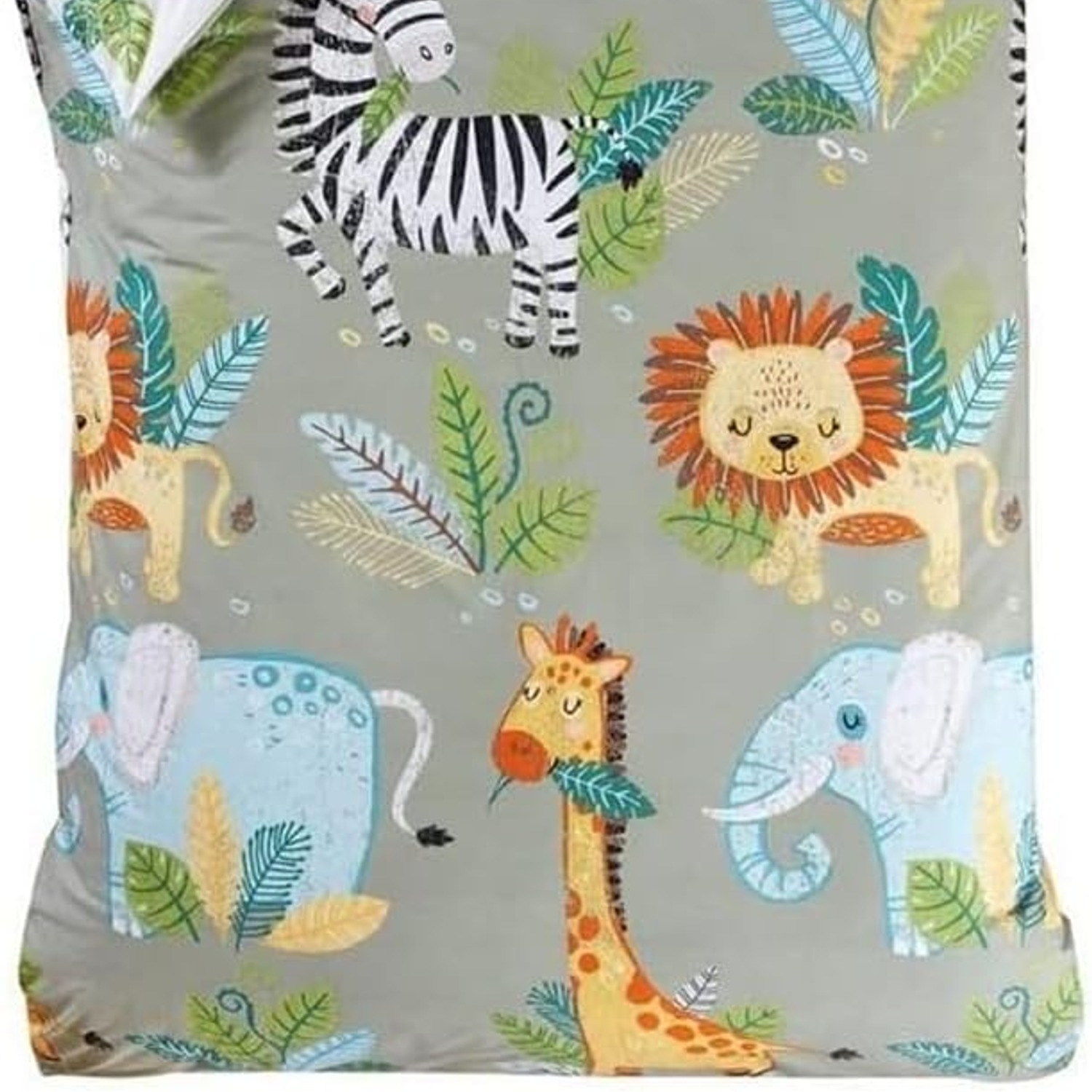
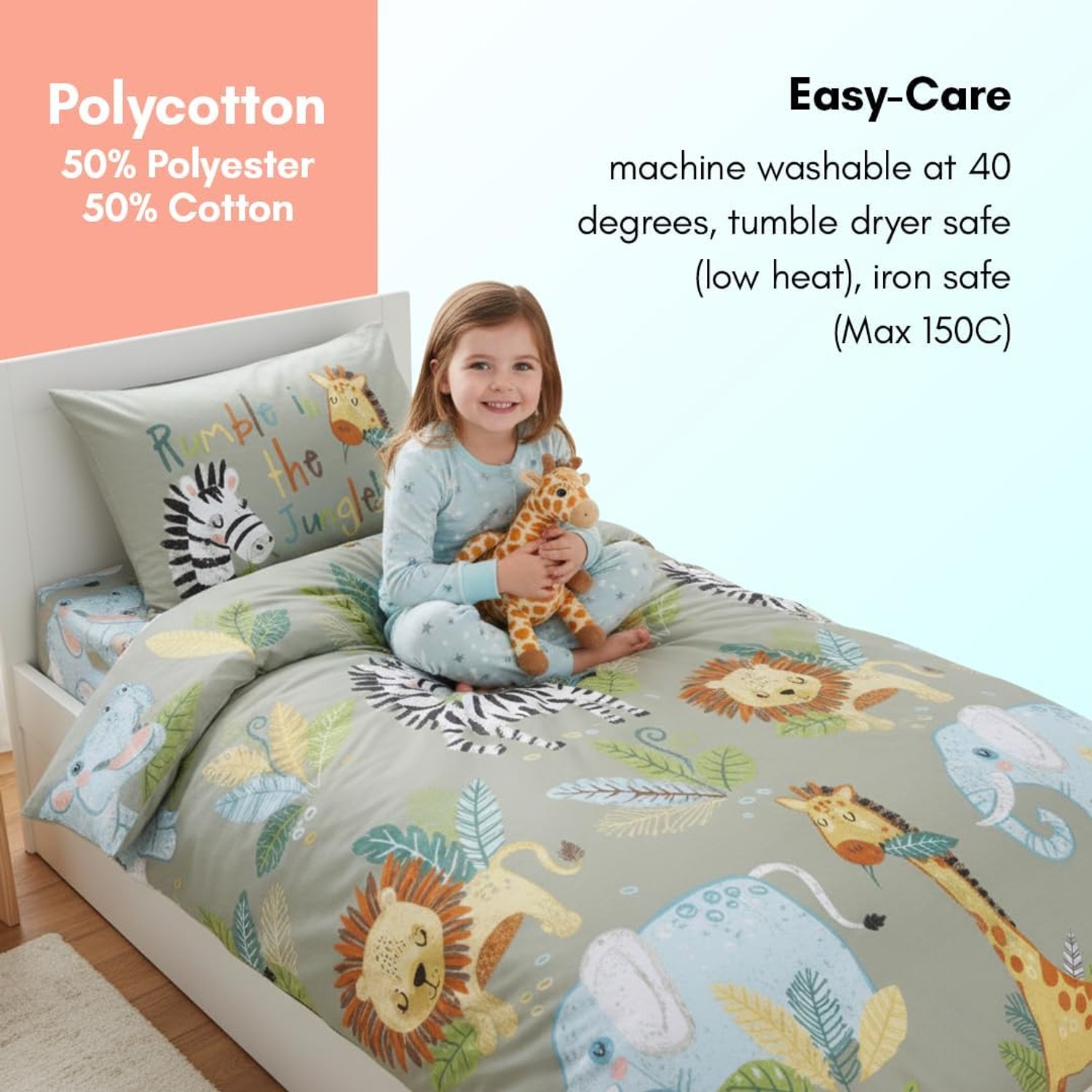
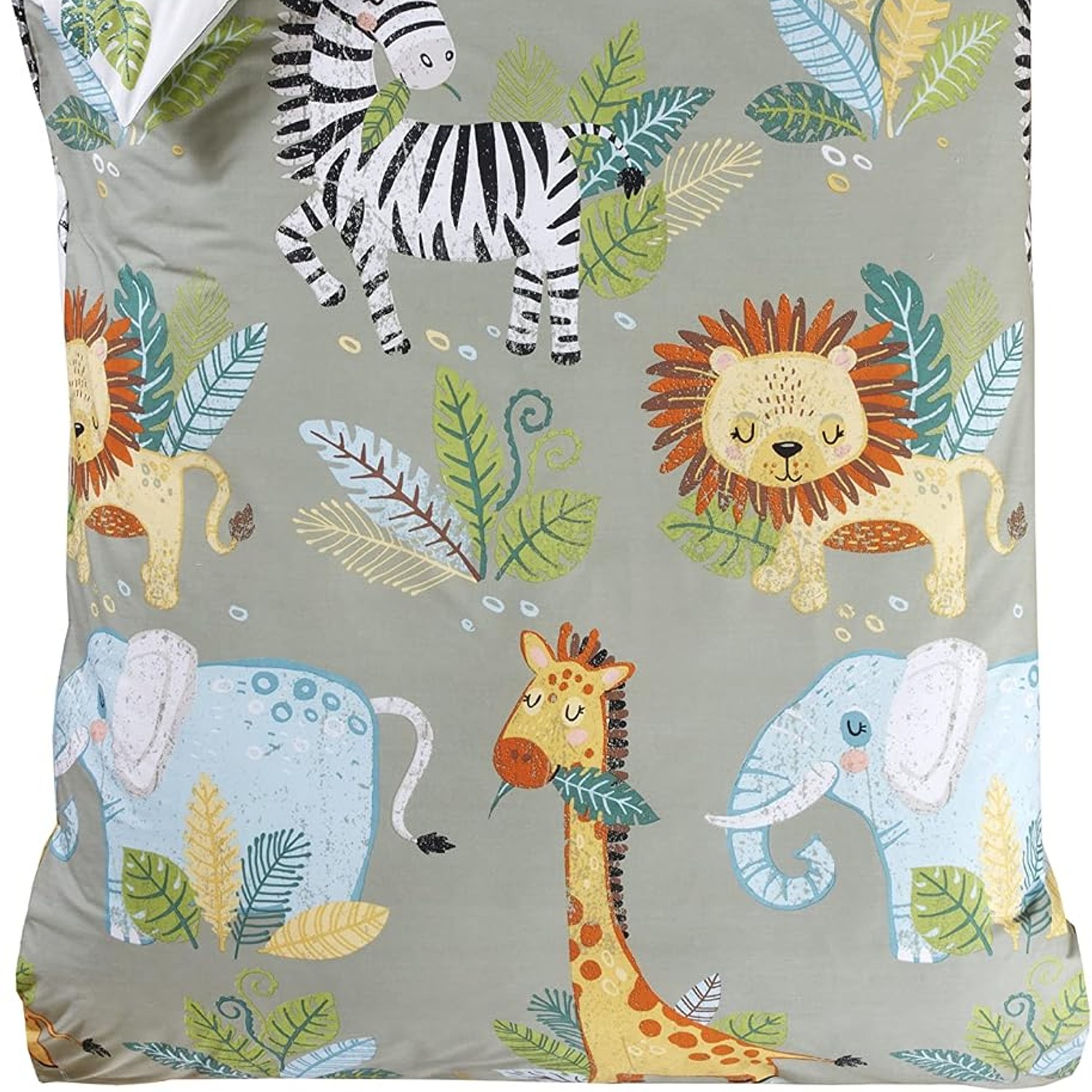
This set is a two-piece single, printed with jungle animals on a green background. The quilt cover is 135 x 200 cm and the pillowcase is 50 x 75 cm. The fabric is polycotton, half cotton and half polyester, with a 132 thread count. It closes with press studs. Everything below is about working out whether those specifics suit your bed, your child and your laundry routine.
Start with the quilt, not the bed
This is the single most useful thing to know about buying a quilt cover. You are not buying for the bed, you are buying for the quilt that sits on it. A single bed and a single quilt are not the same measurement, and "single" means slightly different things in different countries.
This cover is 135 x 200 cm, a slightly shorter single size. The quilt most New Zealand households own for a single bed is 140 x 210 cm. That is 5 cm wider and 10 cm longer than this cover. Five centimetres of width you will barely notice, but 10 cm of length is enough to make the cover sit tight and the corners feel pulled.
So the honest answer is this. If your quilt is 135 x 200 or 140 x 200 cm, this is a good fit. If it is a junior or toddler quilt, it will fit with room to spare, which many parents actually prefer because there is more fabric to tuck. If your quilt is 140 x 210 cm, it will go on but it will look stretched and it will not sit as neatly.
Go and measure. Lay the quilt flat on the floor, run a tape from seam to seam down the length and across the width, and write the numbers on your phone. It takes two minutes and saves a return.
What polycotton actually means for you
A 50/50 cotton and polyester blend is the workhorse of kids' bedding, and for good reason. Each fibre covers the other's weakness.
Cotton is soft, breathable and comfortable against skin. On its own, though, it creases badly, takes a long time to dry and shrinks a little in the wash. Polyester is tough, holds its shape, resists wrinkling and dries fast. On its own it can feel slick and does not breathe as well.
Put them together and you get bedding that feels pleasant, comes out of the dryer looking reasonable and goes back on the bed the same afternoon. If you have ever had a child wet the bed on a rainy Tuesday, you will understand exactly why fast drying matters.
The thread count here is 132. That is a standard everyday weave, not a luxury hotel sheet. It means the fabric is smooth and light rather than dense and heavy. For a child's bed this is usually the right call, because heavy fabric is warmer than most kids need and harder to wash. Expect it to soften over the first two or three washes, which is normal for this kind of weave.
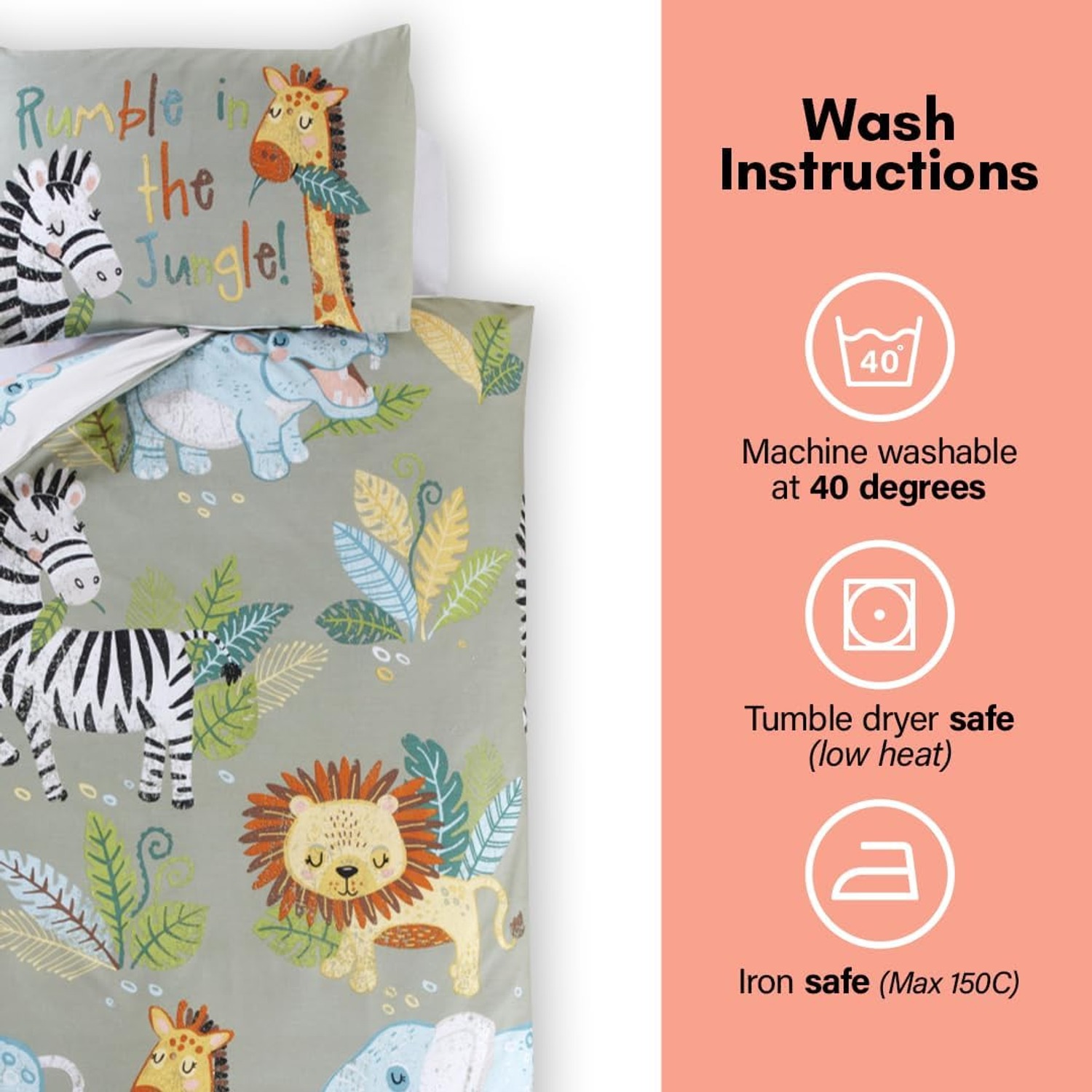
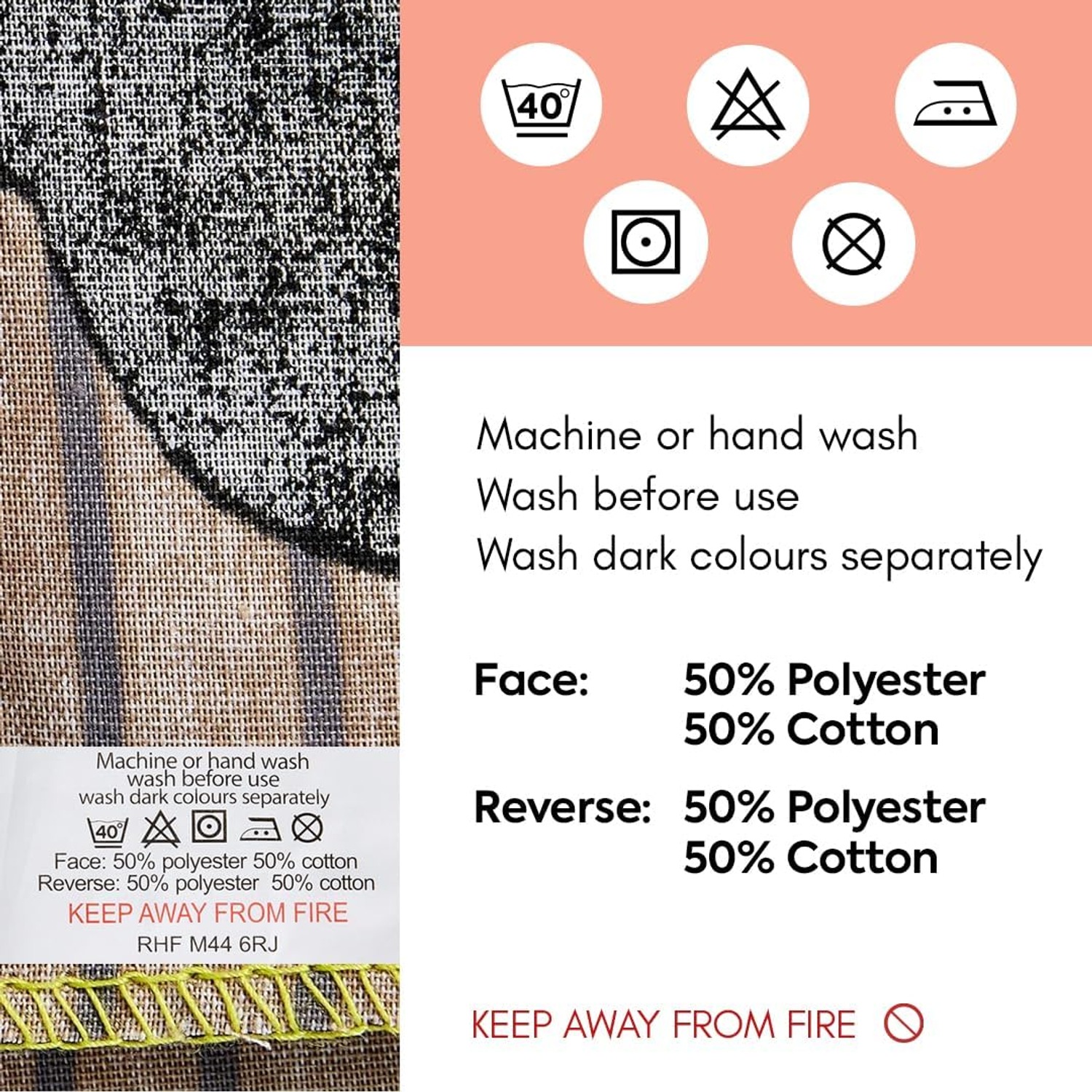
If you want the best polycotton kids bedding experience, the trick is simply to wash it properly from the start. A first wash before use, 40 degrees or cooler after that, and a low dryer setting. That routine keeps the hand feel soft and the print sharp.
Why the closure matters more than you think
Buttons look nice. Ties look nice. Press studs just work.
The opening on this cover uses poppers. They snap shut in seconds, there is nothing to thread through a hole and nothing to sew back on when it pops off in the wash. A child of about five or six can usually do them up without help, which matters if you are trying to get them making their own bed.
The functional job of a closure is to stop the quilt escaping. A cover with a wide open end lets the quilt shuffle down overnight, and by morning your child is sleeping under an empty flap of fabric with a lumpy bundle at their feet. Poppers prevent that.
If your quilt has corner loops, you can also tie them to the cover corners for extra hold. This set does not have internal ties built in, so a couple of small ribbon loops sewn into the cover corners is a cheap five-minute fix if your child is a restless sleeper.
Who this suits
Jungle animals on green is one of the easier themes to live with. It is not tied to a film or a character, so it does not go out of date the moment a sequel comes out. It reads as playful rather than babyish, which means a child who loves it at four is often still fine with it at eight.
It works particularly well for a child moving out of a cot and into their first single bed. A new bed is a big change, and a cover with something to look at helps. Green is also a forgiving base colour in a shared room, because it does not fight with much.
For a shared bedroom with two singles, you can run this on one bed and a plain green or sand-coloured cover on the other. That gives you a coordinated look without the room feeling like a theme park.
Building the rest of the bed
The set gives you the cover and one pillowcase. You will still need a fitted sheet, a quilt and a pillow.
For the sheet, keep it plain. A busy animal print plus a patterned sheet is too much. White, cream or a soft green all work. For the quilt, pick the weight by season rather than by cover, a light summer quilt and a warmer winter one if you can manage both.
If your child uses two pillows, add a second plain pillowcase in a coordinating colour. The pillowcase in this set is 50 x 75 cm, which is standard size in New Zealand, so anything labelled standard will match.
And the genuinely useful tip. Buy two covers if the budget stretches, or buy this one and a plain one. Having a spare on the shelf means a middle-of-the-night bed change takes five minutes instead of turning into a crisis.
Keeping it looking good
The care instructions are straightforward. Machine wash at a maximum of 40 degrees with similar colours. Tumble dry on low heat or hang it in the shade. Warm iron if you want it crisp.
Three habits make printed bedding last. Wash cool, dry gently and keep it out of harsh sun. Direct New Zealand sun will fade a green printed cover faster than any wash cycle will. Hang it inside out on the line if you dry outdoors.
Skip the bleach entirely. For spills, cold water straight away does more than any product does an hour later. If you need a stain treatment, pick a colour-safe one and test it on a hem first.
Turn the cover inside out before washing. It protects the print surface from abrasion against the drum and against zips and buttons on other items in the load.
The short version
Measure your quilt first. This cover is 135 x 200 cm, so it fits a 135 x 200 or 140 x 200 cm quilt well, and a junior quilt with a little room to spare. If your quilt is 140 x 210 cm, look for something longer.
The fabric is a practical 50/50 polycotton at 132 thread count. Soft enough to sleep under, tough enough to wash often, quick to dry when you need the bed remade in a hurry. The press-stud closure keeps the quilt where it belongs.
The set is two pieces, the cover and one pillowcase, so plan on a fitted sheet and a quilt separately. Wash it once before use, keep the water at 40 degrees or below, dry it gently and out of the sun, and it will keep its colour through plenty of nights in the jungle.