
The complete guide
Pillow Protectors Buying Guide, How To Choose And Use Them
The problem nobody thinks about until it is too late
Most people replace a pillow because it has gone flat. Fair enough. But if you have ever unzipped an old pillowcase and found a yellowed, blotchy pillow underneath, you already know the other reason pillows get retired early. They absorb things. Sweat, hair oil, moisturiser, saliva, the odd dribble of coffee from reading in bed. A cotton pillowcase does nothing to stop any of it. It soaks through and keeps going.
That staining is not just cosmetic. Once moisture gets into the fill of a pillow it stays there, and repeated cycles of damp and dry are exactly what breaks down foam and flattens down. So a pillow that might have lasted several years gets thrown out well before it needed to be.
A pillow protector sits between your pillow and everything described above. It is one of the cheapest bits of bedding you can buy and one of the few that genuinely extends the life of a more expensive item.
How a waterproof pillow protector actually works
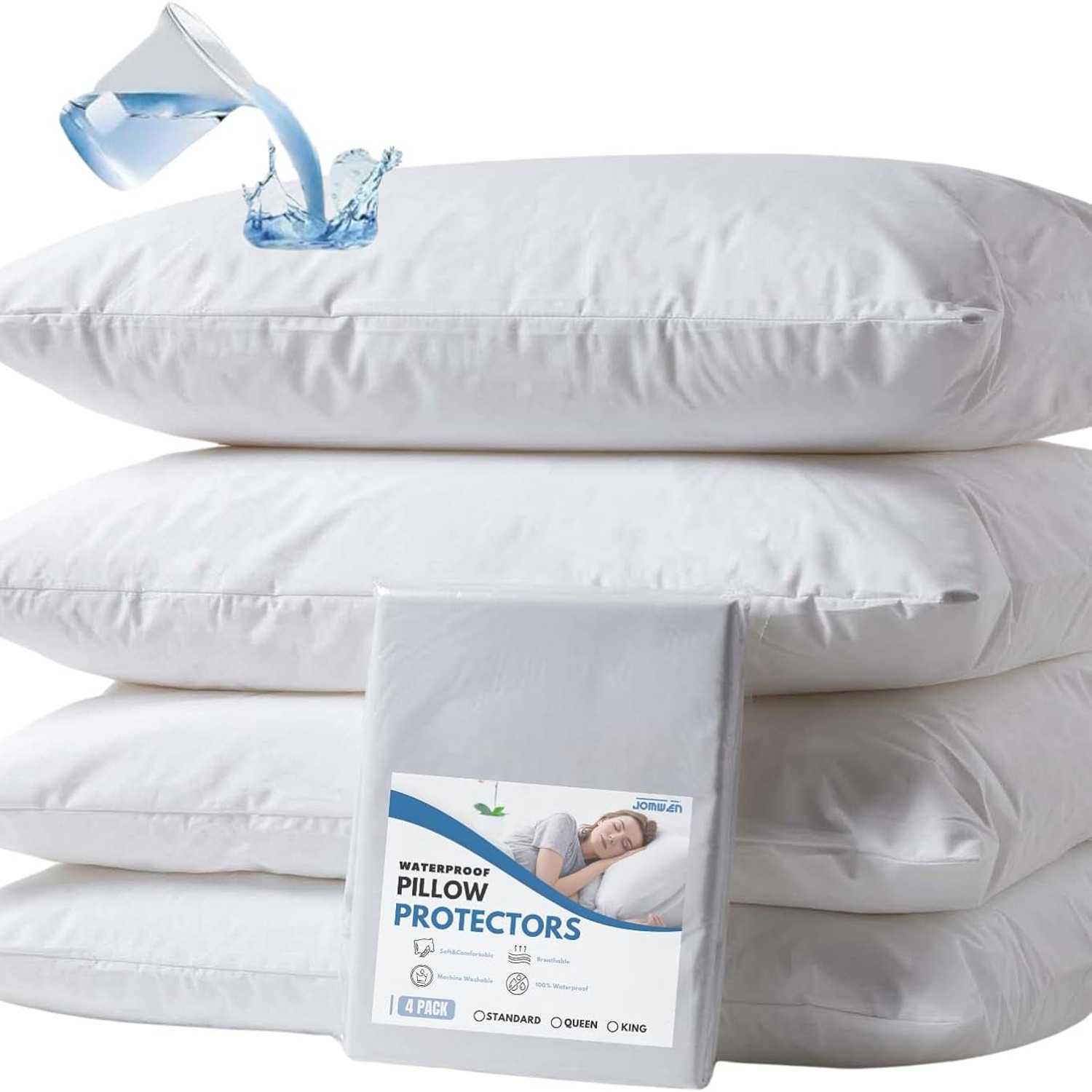
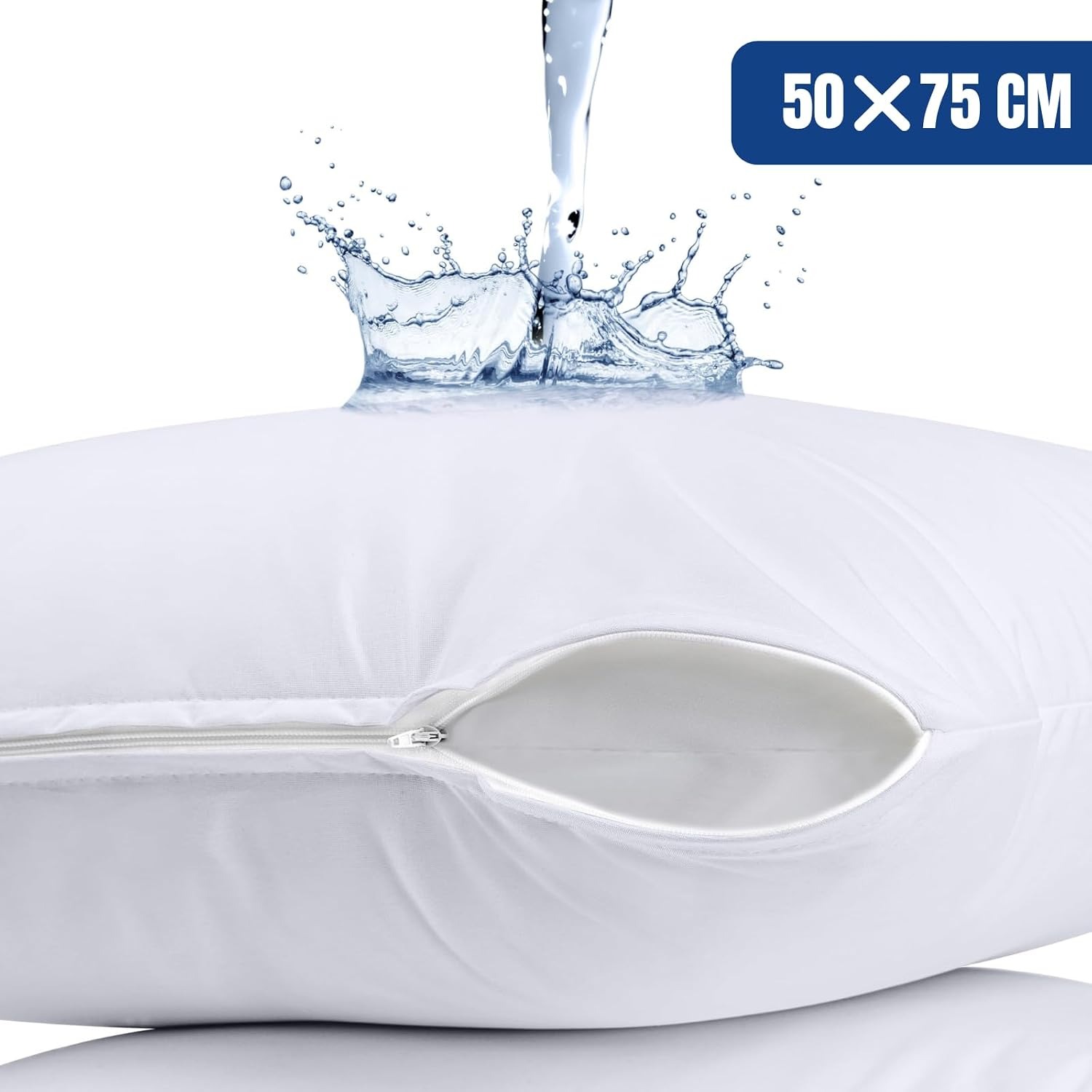
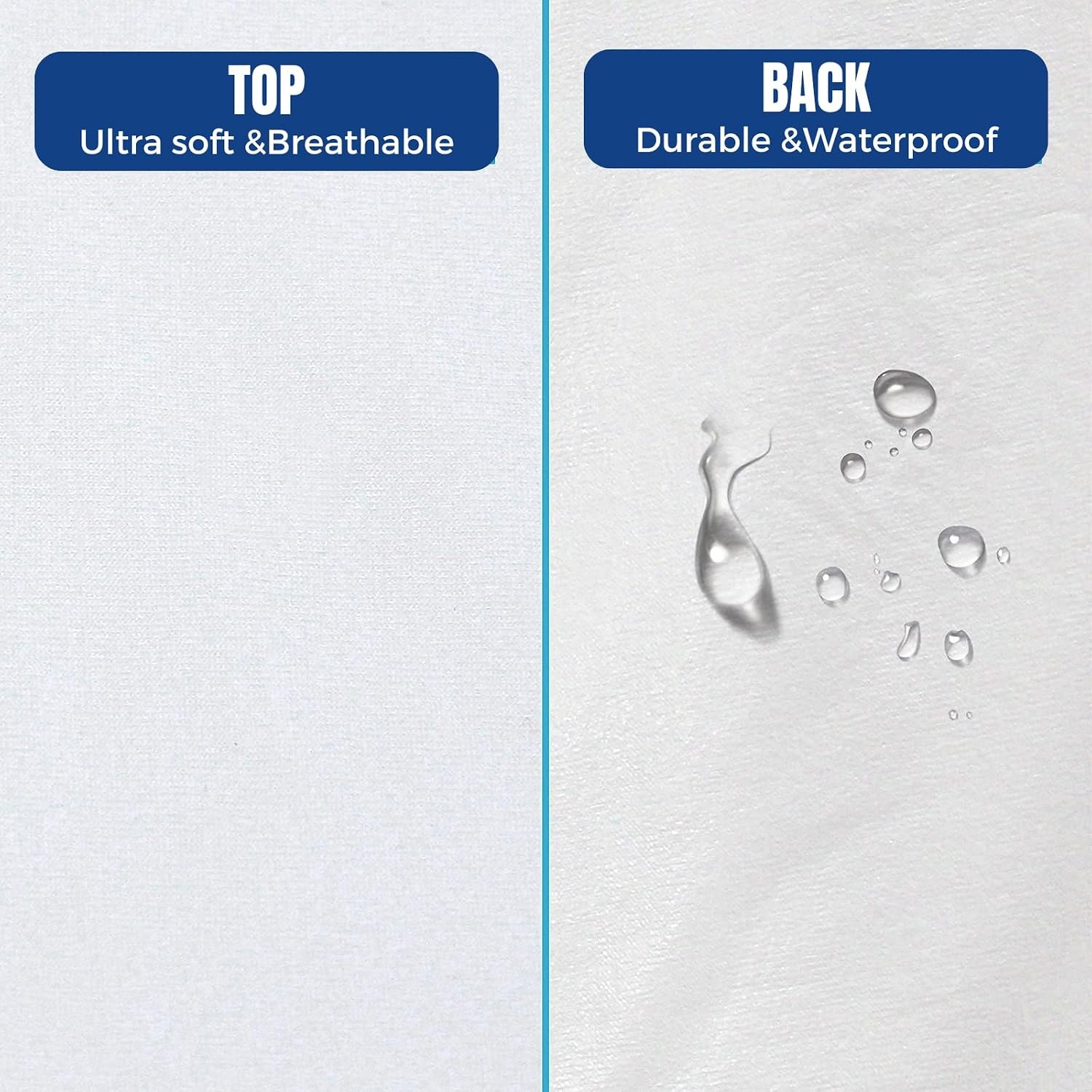
The protectors on this page are built in two layers. The outer face is a knit terry polyester. That is the bit you touch, and it is why the protector feels like fabric rather than a shower curtain. Behind it sits a TPU layer, which is the waterproof component. Liquid hits the fabric face, spreads a little, and stops at the TPU instead of carrying on into the pillow.
TPU is used widely in bedding and baby products because it can be bonded to fabric and still bend and fold without cracking. It is not a spray or a finish that rinses away after ten washes. It is a layer built into the construction.
What the protector will not do is change how your pillow feels in any dramatic way. A pillow protector is thin. Put a pillowcase over the top and the pillow underneath still behaves like itself.
Why the zip matters more than you would guess
There are three common ways to close a pillow protector. An open end, like a regular pillowcase. An envelope flap. Or a zip.
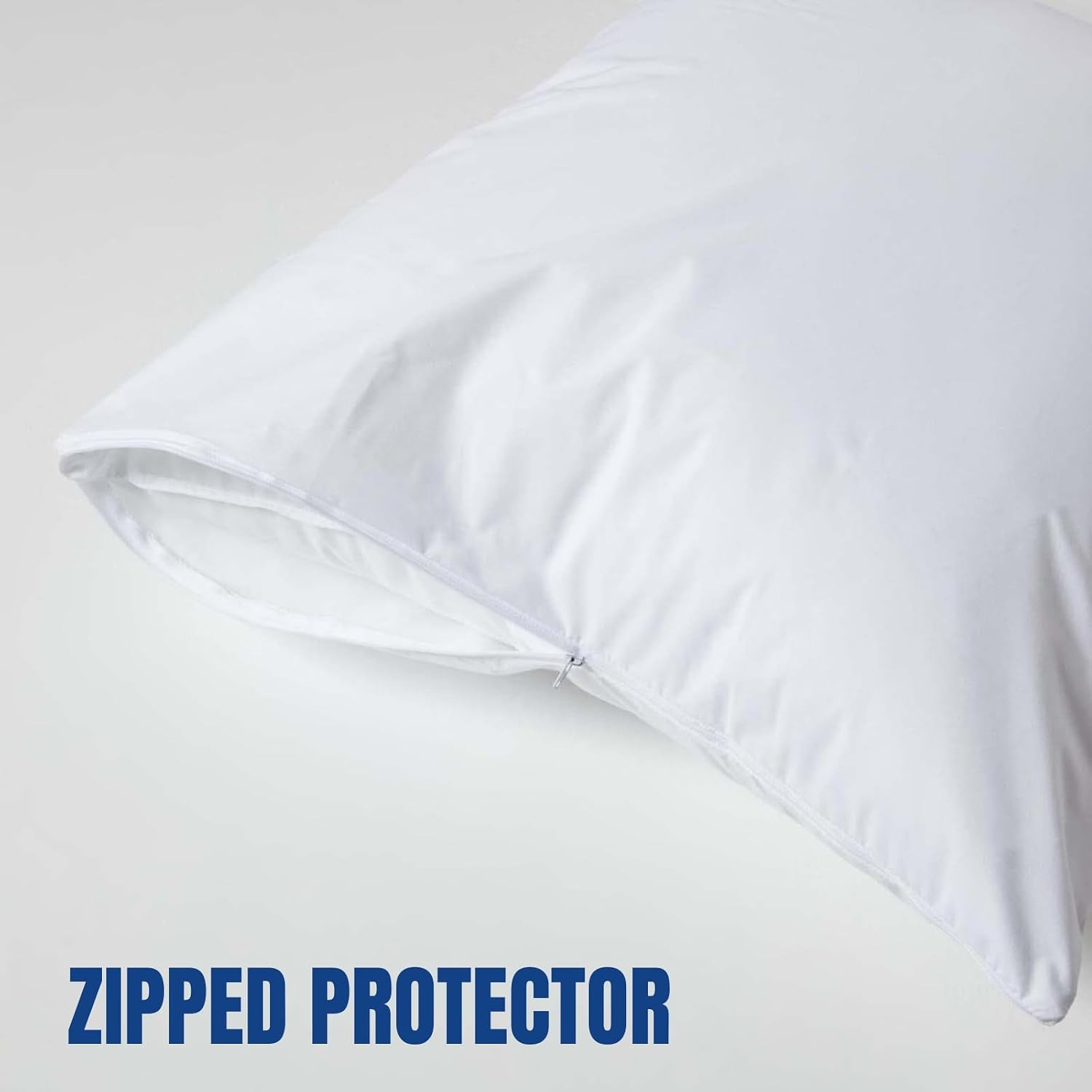
Open-ended protectors are the cheapest and the least useful, because the end that is not covered is often the end nearest your face. Envelope flaps are better, but they work loose over time as the pillow shifts. A zip that runs around the opening closes the protector completely, and it stays closed until you decide otherwise.
For anyone who moves around at night, or for a child's bed, that difference is the whole point. A zippered pillow protector is still fully on the pillow in the morning. The others frequently are not.
Who these suit
People who sleep warm. If you wake up with a damp patch where your head was, that moisture is going into the pillow every single night. A protector catches it before it gets there.
Households with kids. Spilled drinks, nosebleeds, sick days, the occasional accident. A kids pillow protector that zips shut takes a lot of stress out of all of it. You strip the pillowcase, wipe or wash the protector, and the pillow underneath is fine.
Anyone with a nice pillow. If you have spent real money on a latex or memory foam pillow, protecting it is the obvious move. Those pillows are not washable, so once they are stained or saturated, that is that.
Share houses and rentals. Pillows get moved, lent out and slept on by visitors. A protector means you can keep using the same pillow with confidence.
Guest rooms. A spare pillow might be used four times a year. Protecting it means you only ever need to change the pillowcase between guests.
Choosing the right size and pack
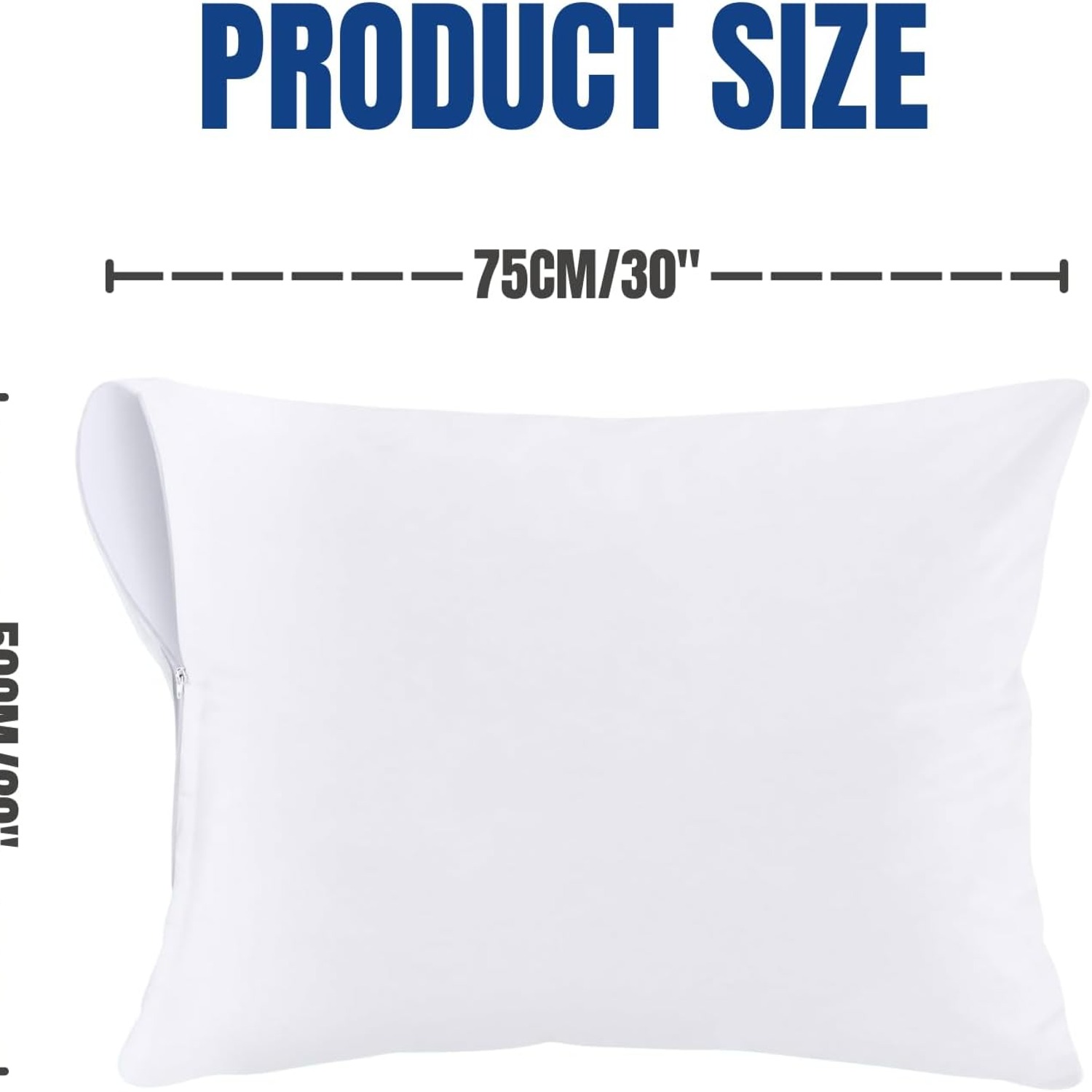
These measure 50 x 75 cm, which is the standard and queen pillow size used across most New Zealand bedding. Before you order, take a tape measure to the pillow you actually own. Pillow sizing is less consistent than it should be, and a king pillow or a European square will not fit this protector.
On pack size, the honest advice is to buy more than you think you need. The reason is laundry. If you only own exactly as many protectors as you have pillows, then every wash day means either stripping the bed and waiting, or putting the pillow back unprotected. One spare per bed solves that. So the 4 pack suits a two-pillow bed with spares, or two beds with no spares. Scale from there.
Looking after them
Care is deliberately simple. Machine wash and tumble dry. That is the point of a protector, it is meant to be laundered often.
A few habits will make them last longer. Zip them closed before they go in the machine, otherwise the zip pull catches on sheets and doonas. Use a moderate temperature rather than the hottest setting your machine offers, since sustained high heat is hard on any waterproof layer. Skip the bleach. Skip the fabric softener too, because softener leaves a coating that can stop the face fabric handling liquid the way it should.
Do not iron them, and do not dry clean them. Neither is needed and both can damage the TPU.
As for frequency, washing them every few weeks with your sheets is a sensible baseline. Wash sooner if there has been a spill or if someone in the house has been unwell.
Signs it is time to replace one
Protectors are consumables, not forever items. Look for a face fabric that has gone thin or pilled badly, seams that are pulling apart, or a zip that no longer runs smoothly. If water starts sitting on the pillow rather than being held by the protector, the barrier has had it.
None of that is a failure of the product, it is just what happens after a few hundred wash cycles. Replacing a protector is far cheaper than replacing the pillow it was looking after.
The short version
A waterproof pillow protector is a small purchase that does a specific job well. It keeps sweat, spills and oils out of your pillow, which means the pillow stays cleaner and lasts longer. These ones are 50 x 75 cm, white, with a terry polyester face, a TPU waterproof layer inside, and a zip that goes around the opening so the pillow is covered on every side.
Pick the 2 pack for one bed or the 4 pack if you want spares or you are covering more than one room. Wash them with your sheets, keep the heat moderate, skip the softener, and they will quietly do their job in the background for a long time.